A well-organized kitchen drawer should make cooking feel easier, not merely look tidy. The most reliable system is to clear one drawer at a time, group tools by task, measure the usable space, and place everyday items closest to where you use them.
This kitchen drawer organization guide starts with your daily routines. You will declutter, measure, create practical work zones, choose the right organizers, and build a layout that is easy to reset after dinner.
Start with a 15-minute drawer reset
You do not need to organize the entire kitchen in one afternoon. Choose the drawer that slows you down most and set a 15-minute timer. Place everything on the counter, wipe out the drawer, and make four quick groups:
- Keep here: items used regularly in this part of the kitchen.
- Move: useful tools that belong closer to another task zone.
- Store elsewhere: seasonal or occasional items that do not deserve prime space.
- Let go: broken tools, uncomfortable utensils, and unnecessary duplicates.
If two tools do the same job, keep the one that feels better in your hand and is easier to clean. The goal is not an empty drawer; it is a drawer that contains only useful things.
How to organize kitchen drawers step by step
1. Empty and clean one drawer
Removing everything reveals crumbs, sticky residue, and objects that have been hiding at the back. Vacuum loose debris, wipe the interior with a cleaner suitable for the drawer material, and let it dry completely before returning anything.
2. Measure before buying organizers
Measure the inside width, depth, and usable height—not the outside of the cabinet. Check whether hinges, drawer slides, or a curved front reduce the available space. Keep the measurements on your phone and allow a small margin so the organizer can be lifted out for cleaning.
3. Build zones around the way you cook
A good drawer location removes extra steps. Instead of keeping every utensil together, place tools near the work they support:
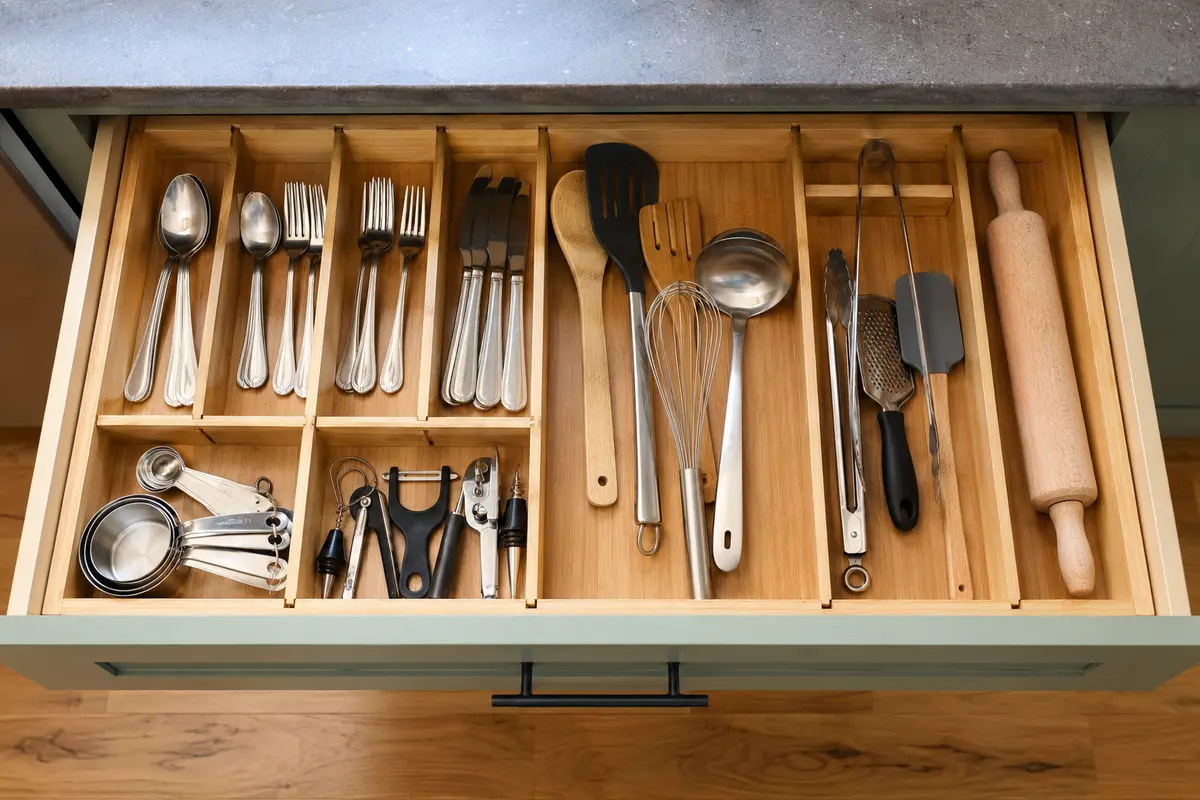
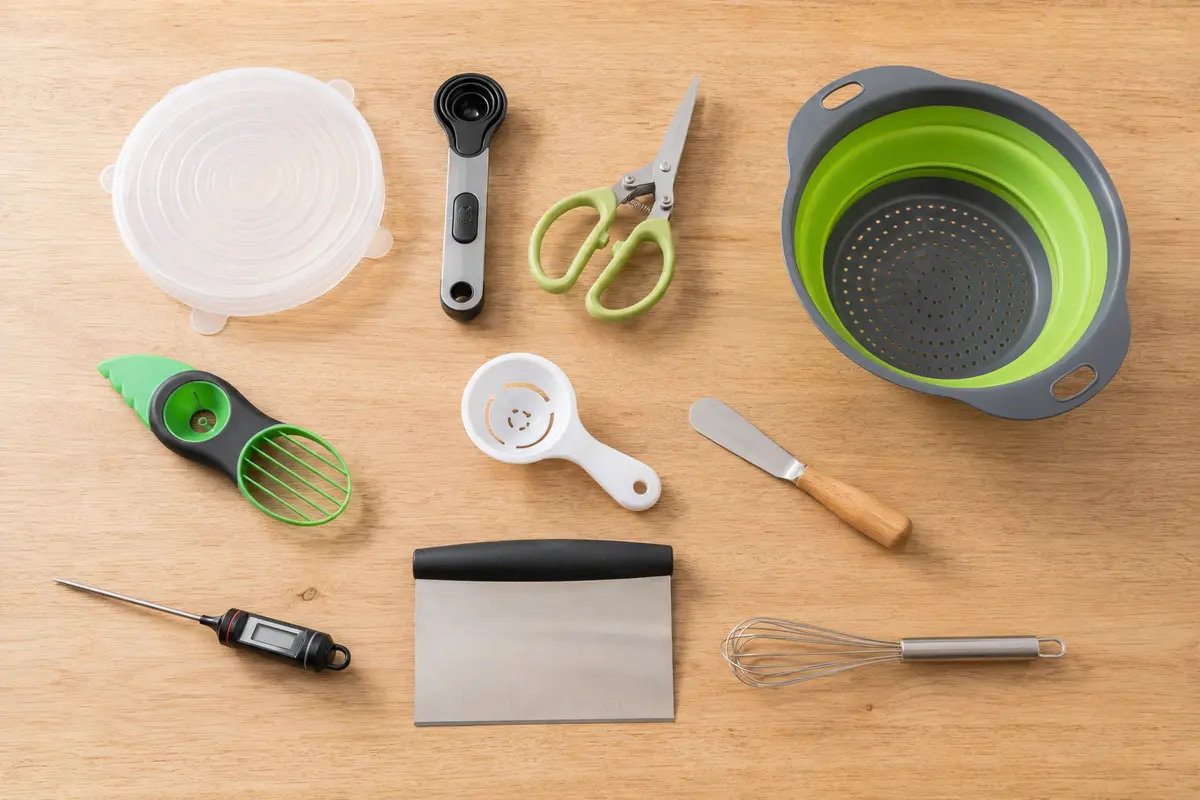
- Prep zone: peelers, measuring spoons, thermometers, can openers, and small knives in protected storage.
- Cooking zone: spatulas, tongs, wooden spoons, whisks, and ladles beside the range—but away from direct heat.
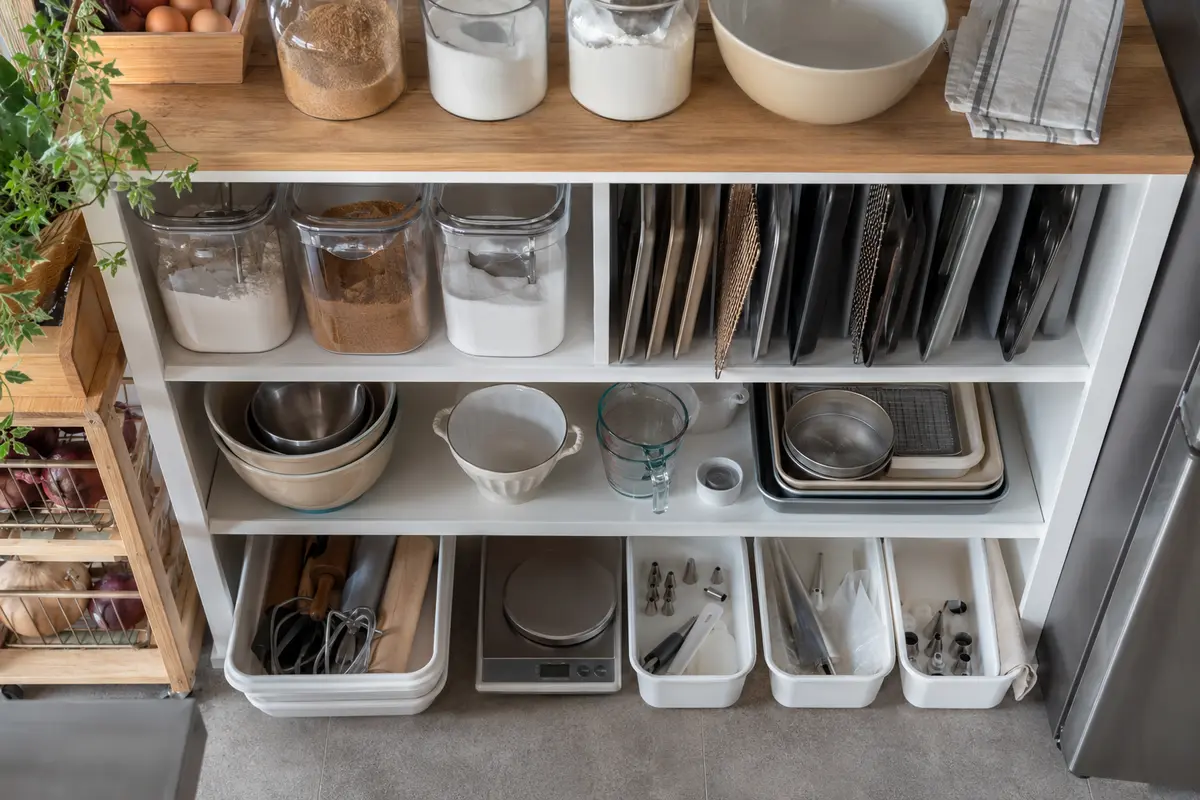
- Baking zone: measuring cups, pastry tools, cookie cutters, and piping accessories near mixing bowls and baking pans.
- Serving zone: flatware, napkins, trivets, and serving utensils near the dining area.
- Cleanup zone: towels, reusable cloths, and food-storage supplies near the sink or dishwasher.
4. Give each drawer one clear purpose
A drawer becomes difficult to maintain when it is asked to store unrelated categories. “Cooking tools” is a clear purpose. “Things that did not fit anywhere else” is not. If you need a household utility drawer, limit it to a few useful categories such as pens, tape, scissors, and charging cables, each in its own small tray.
5. Put daily tools in the easiest positions
Store frequently used items at the front or in the top drawers. Occasional tools can sit toward the back or in a lower drawer. This simple frequency rule matters more than making every compartment look perfectly symmetrical.
Choose the right kitchen drawer organizer
The best organizer is the one that fits both your drawer and your tools. Buying a tray before decluttering often creates a new problem: you end up organizing things that should have left the kitchen.
| Organizer | Best for | What to check |
|---|---|---|
| Expandable cutlery tray | Flatware and serving pieces | Closed and expanded dimensions |
| Adjustable dividers | Long utensils, towels, and wraps | Drawer height and nonslip ends |
| Modular small bins | Gadgets and narrow drawers | A mix of sizes with minimal gaps |
| In-drawer knife insert | Safe, compact knife storage | Blade length, capacity, and clearance |
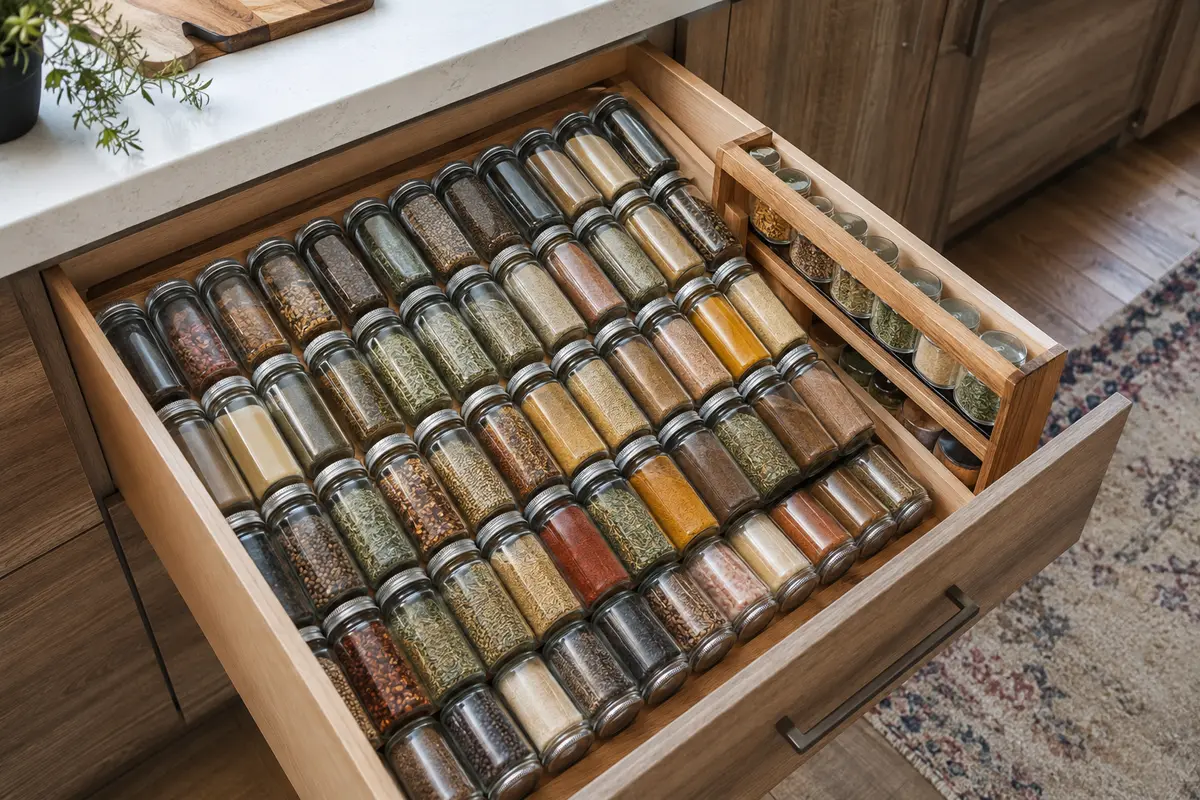
| Angled spice insert | Seeing jar labels at a glance | Jar height when the drawer closes |
| Peg system | Plates, bowls, pots, and lids | Deep-drawer height and weight capacity |
Plastic organizers are usually easy to wash and often include nonslip feet. Bamboo and wood bring warmth but should be dried thoroughly after cleaning. Modular bins are especially useful in small or unusually shaped drawers because you can change the layout later.
Kitchen drawer organization ideas for common problem areas
Narrow drawers
Do not force a full-size cutlery tray into a narrow drawer. Use two or three slim bins and store tools in a single layer. Keep only the essentials—perhaps a peeler, thermometer, bottle opener, measuring spoons, and clips—and relocate specialty gadgets.
Deep drawers
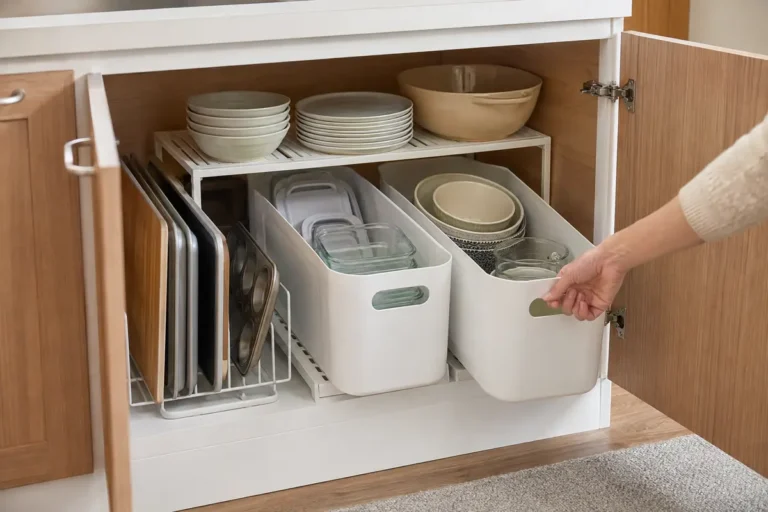
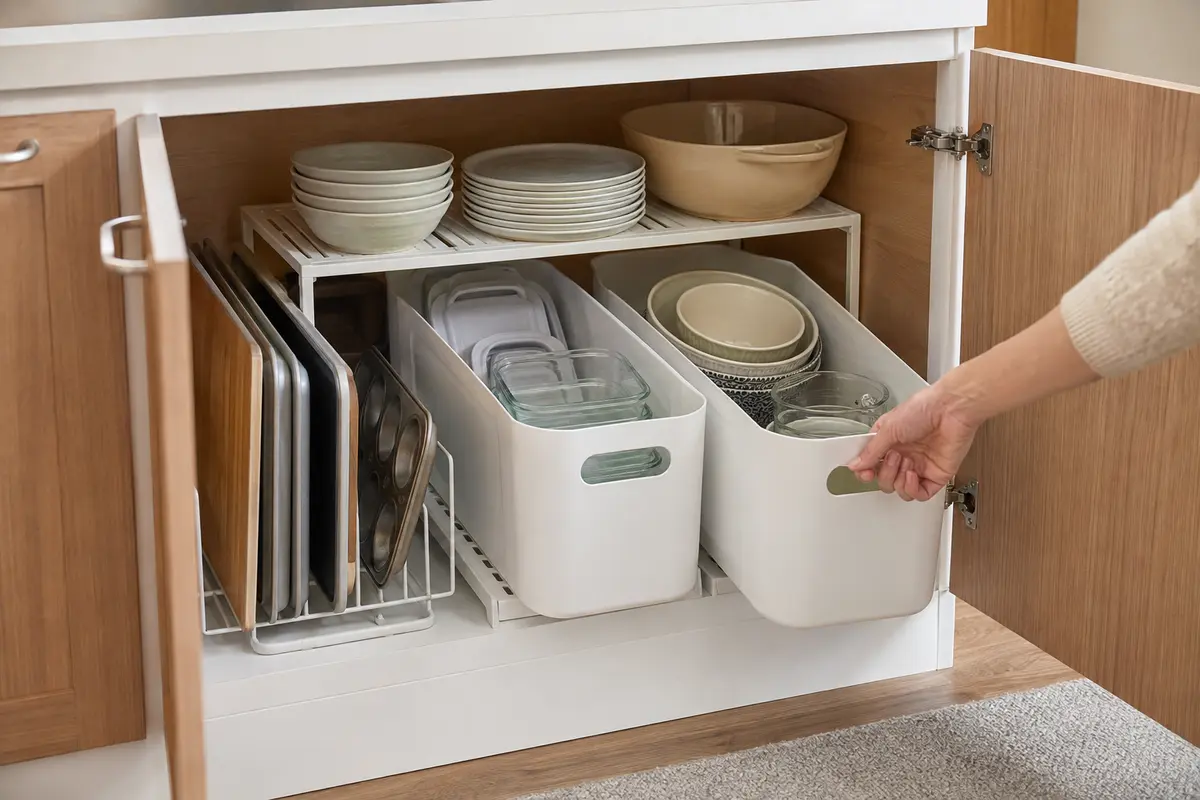
Deep drawers are ideal for dishes and cookware, but stacks can slide when the drawer opens. Adjustable pegs, tall dividers, or sturdy bins keep plates, bowls, lids, and pans separated. Store heavier pieces low, avoid unstable stacks, and confirm the drawer hardware can support the load.
For more cookware-specific ideas, see our guide to organizing pots, pans, and lids.
The gadget drawer
Small gadgets create clutter because their shapes do not match. Group them by task: opening tools, measuring tools, baking accessories, and food-prep tools. Place each group in a shallow bin so one item cannot migrate across the whole drawer.
Food wraps and reusable bags
Store foil, parchment, wraps, and reusable bags on their edges when the drawer is deep enough. Dividers keep boxes upright and make it easier to see when supplies are running low. If the drawer is shallow, place boxes flat in a single layer instead of stacking them.
Knives
Never leave sharp knives loose in a drawer. Use an in-drawer knife block, blade guards, or another fitted system that protects both the cutting edge and your hands. Place knife storage near the main prep surface and follow the manufacturer’s care instructions.
What should not live in a kitchen drawer?
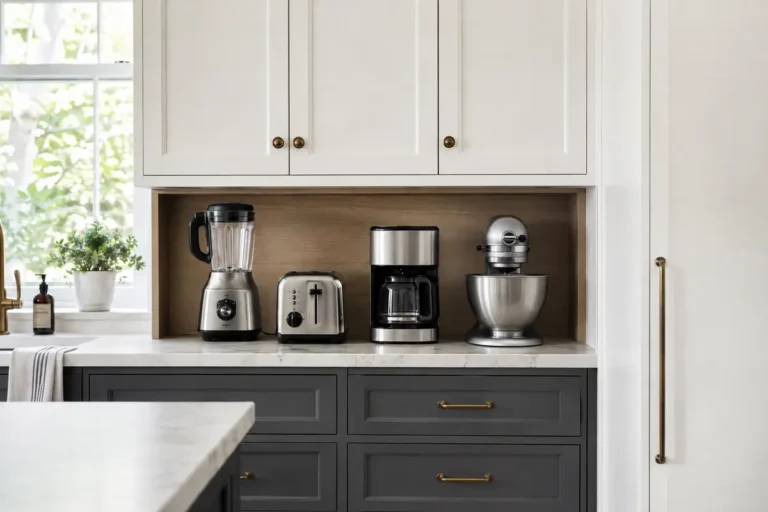
Drawer space is most valuable for compact items used regularly. Move bulky appliances, rarely used serving pieces, and large pantry packages to cabinets, shelves, or the pantry. Store household chemicals away from food-preparation tools and follow label directions, especially in homes with children or pets.
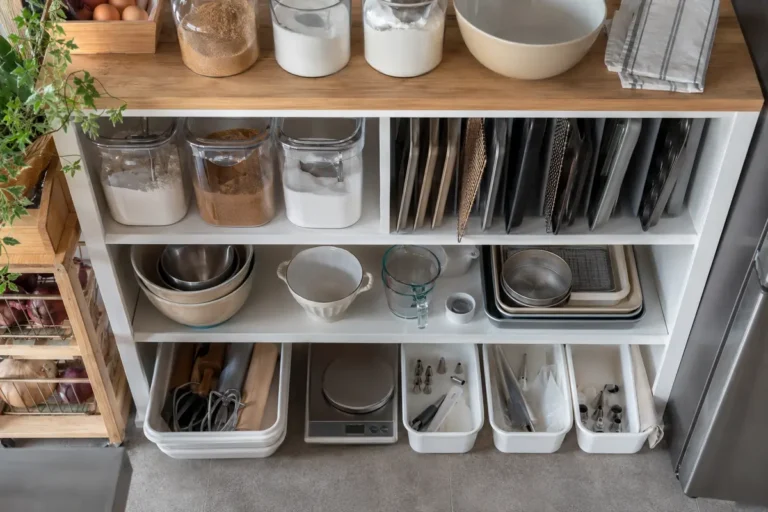
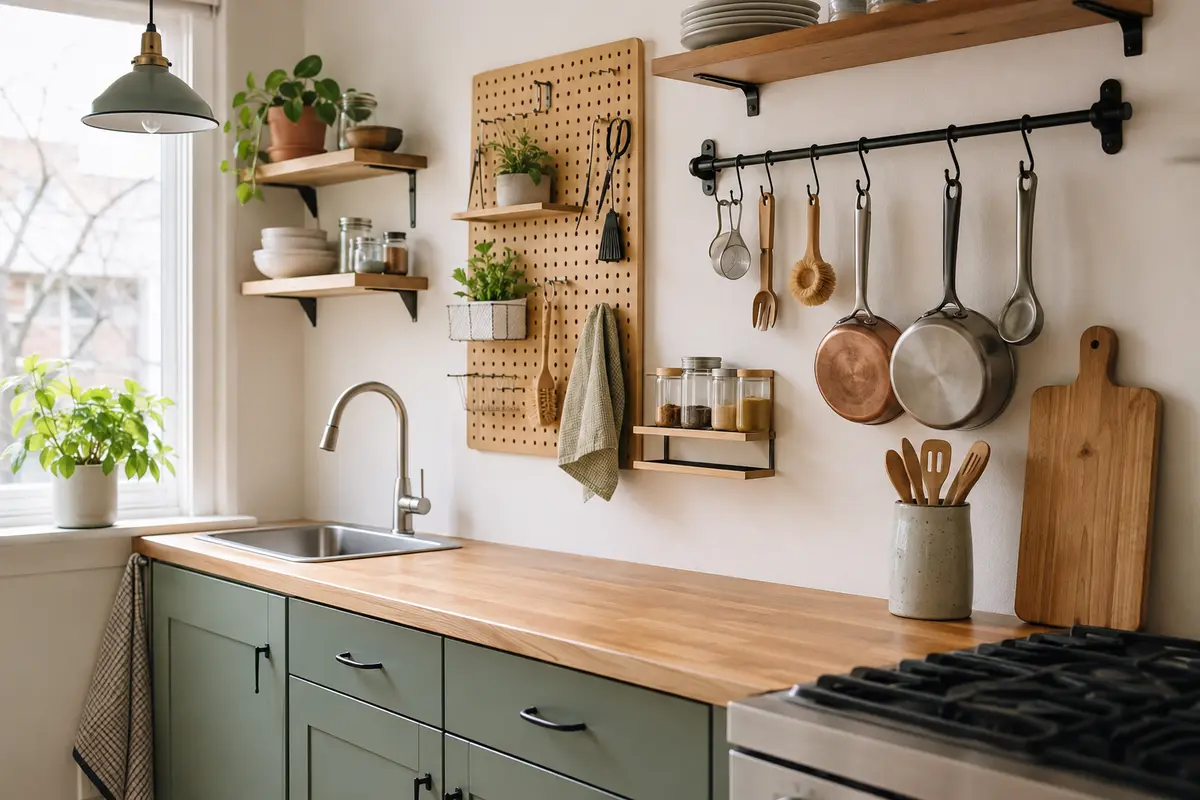
If drawers are overflowing, the answer is not always another insert. A wall rail, shelf, or magnetic system can move safe, frequently used items into otherwise unused space. Explore our magnetic kitchen storage ideas for small kitchens.
Seven mistakes that make drawers messy again
- Buying organizers first. Declutter and measure before spending money.
- Filling every inch. Leave a little breathing room for easy access and future changes.
- Mixing unrelated categories. Give every drawer a clear job.
- Ignoring drawer height. A tray or spice jar is useless if the drawer cannot close.
- Storing knives loose. Use fitted, protective storage.
- Choosing looks over cleaning. Select materials you can maintain easily.
- Creating a system only one person understands. Make categories obvious to everyone who uses the kitchen.
How to keep kitchen drawers organized
A sustainable system should take seconds—not a major weekend project—to reset. Return tools to their assigned zone after washing, wipe spills as soon as you notice them, and do a quick review every few months. If one compartment keeps overflowing, that is useful feedback: the category may need more space, a different location, or fewer items.
For a five-minute reset, straighten dividers, return wandering tools, remove one item you no longer use, and wipe the drawer front and handle. Small maintenance prevents the full jumble from returning.
The best kitchen drawer organization system is the one you can maintain on a busy evening. Start with one frustrating drawer, give it one clear purpose, and let your daily routines decide where everything belongs.
Frequently asked questions
How do I organize kitchen drawers without buying organizers?
Start by removing duplicates and grouping tools by task. Reuse small, sturdy boxes as temporary compartments, then add organizers only where items still slide or mix together.
What should go in the top kitchen drawers?
Keep the most frequently used items in the easiest-to-reach drawers: flatware near the eating area, prep tools near the main counter, and cooking utensils near the stove.
How do I organize deep kitchen drawers?
Use tall dividers, peg systems, or open bins to create vertical categories. Store heavier items lower down and avoid unstable stacks that are difficult to lift.
How can I stop drawer organizers from moving?
Choose an insert close to the drawer's dimensions, use adjustable tension dividers, or place a removable nonslip liner underneath the organizer.
Is it safe to store kitchen knives in a drawer?
Yes, when each blade is protected in a fitted knife insert or individual sheath. Never leave loose blades mixed with other utensils.
Kitchen conditions and products vary. Follow manufacturer guidance and consult a qualified professional when safety or specialist work is involved.