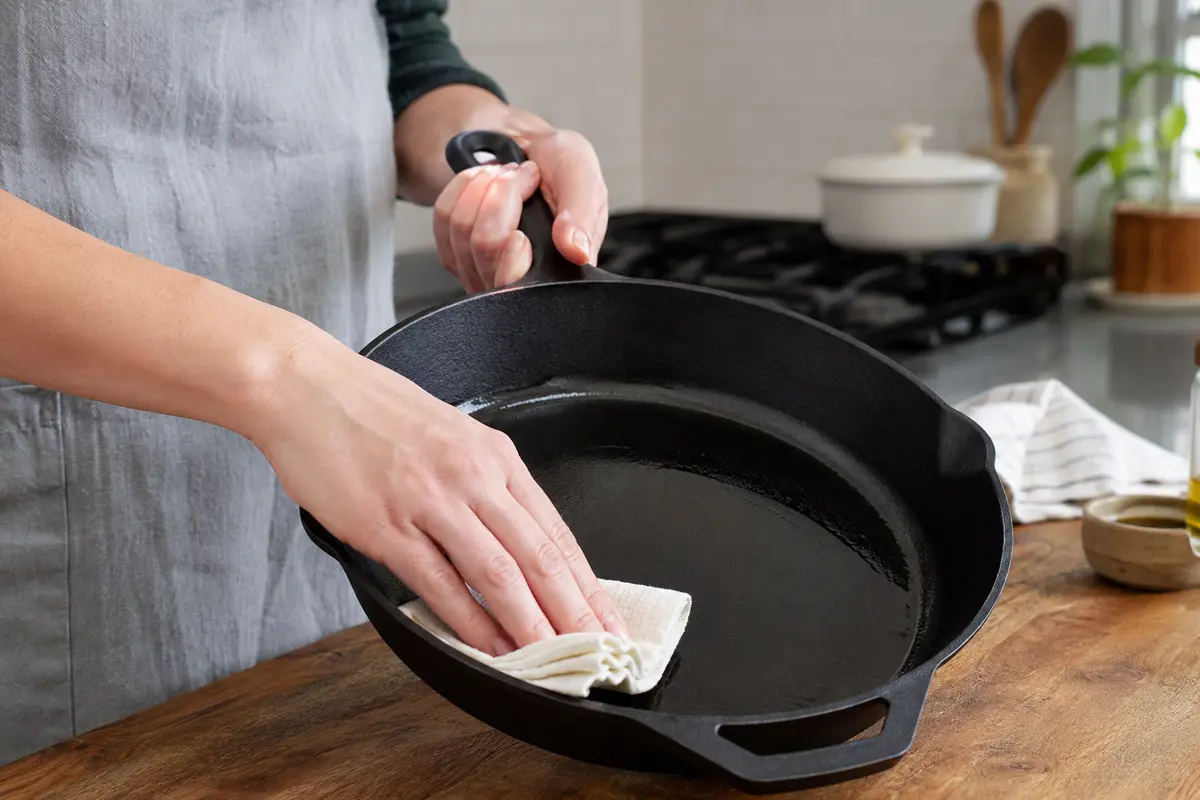
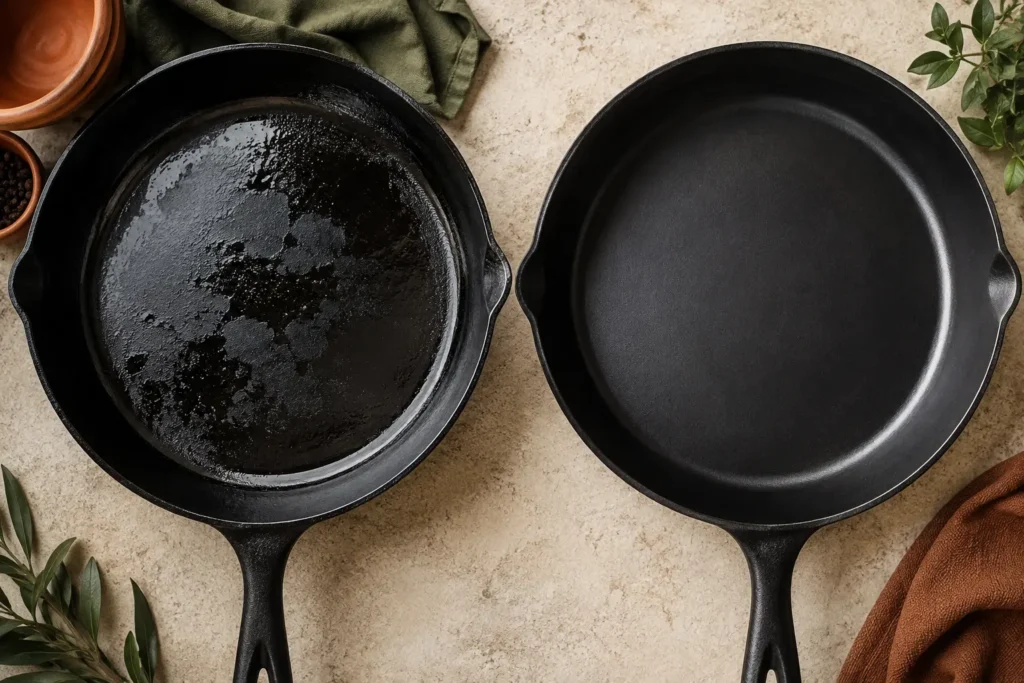
A well-seasoned cast-iron skillet should look smooth and dark—not wet, gummy, or mirror-shiny. The secret is not more oil. It is a nearly invisible coat of oil, enough heat to bond it to the iron, and patience while the pan cools.
Cast-iron seasoning at a glance
- Clean: Remove food, rust, and loose seasoning.
- Dry: Eliminate moisture from the cooking surface, rim, handle, and base.
- Oil: Spread a tiny amount over the entire pan.
- Buff: Wipe repeatedly until no wet streaks remain.
- Bake: Place the skillet upside down in a hot oven for one hour.
- Cool: Switch off the oven and let the pan cool before handling.
Do you need to season a new cast-iron skillet?
Many modern cast-iron pans arrive factory-seasoned and are ready to cook with after a quick wash and dry. You do not need to run an oven-seasoning cycle every time you buy a new skillet.
Seasoning is useful when a pan has bare gray iron, light rust, a dry or patchy surface, or loose coating that has been scrubbed away. A cared-for skillet usually maintains itself through regular cooking with a little fat.
What cast-iron seasoning actually does
When a very thin film of oil is heated sufficiently, it polymerizes: the oil changes from a liquid into a hard layer bonded to the iron. Repeated thin layers help slow rust and create a naturally easy-release cooking surface.
Seasoned cast iron is not identical to a factory-made nonstick pan. Eggs and delicate fish may still need preheating and cooking fat, especially while the seasoning is new.
What you need
- A cast-iron skillet or pan
- Mild dish soap and a nonabrasive brush or sponge
- Two lint-free cloths or sturdy paper towels
- A small amount of neutral, refined cooking oil
- An oven, a lined tray or foil, and dry heat-resistant gloves
Step 1: Clean the skillet
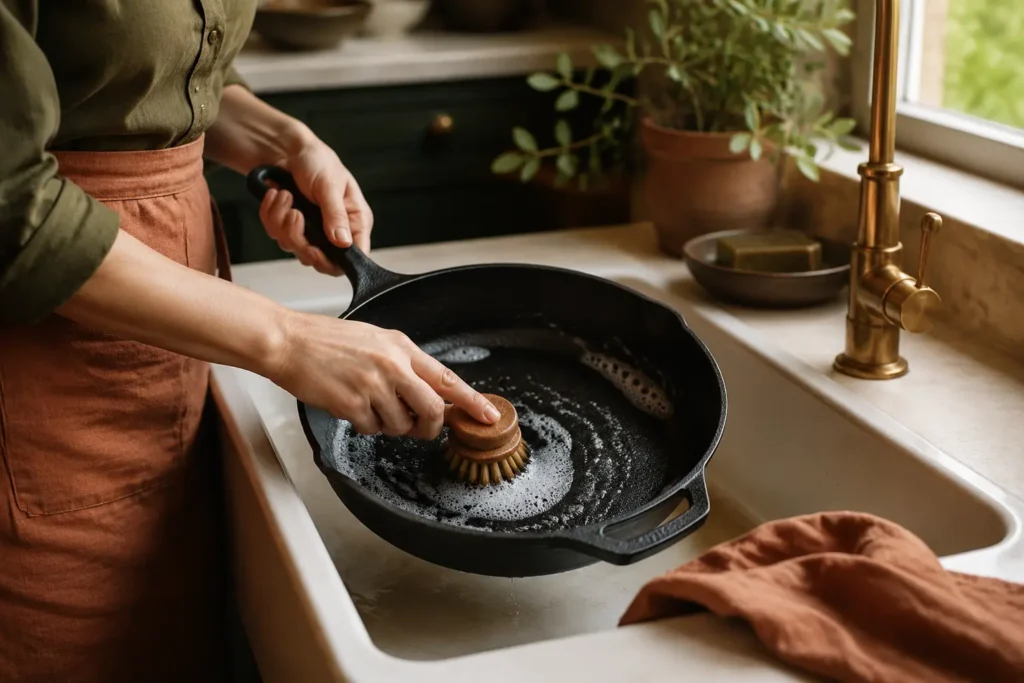
Wash away food residue, dust, or loose flakes with warm water, a little mild dish soap, and a nonabrasive brush. Modern mild soap is suitable for routine cleaning and will not normally remove a fully bonded seasoning layer.
For light rust, scrub only until the orange residue and unstable coating are gone. Do not leave bare cast iron soaking in water, and never put it in a dishwasher.
Step 2: Dry it completely
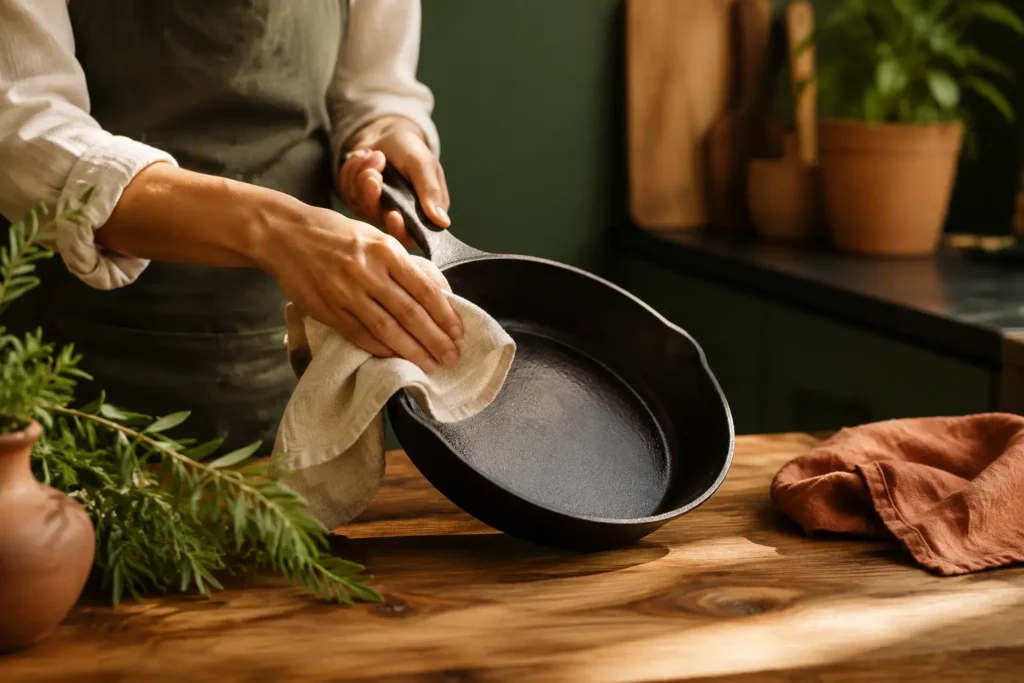
Towel-dry the skillet inside and out. Then warm it briefly over low heat or in a warm oven so hidden moisture evaporates from the pores, handle, rim, and base. Let it become cool enough to handle safely before adding oil.
Drying matters because moisture trapped under a fresh coating can encourage rust and weaken the finish.
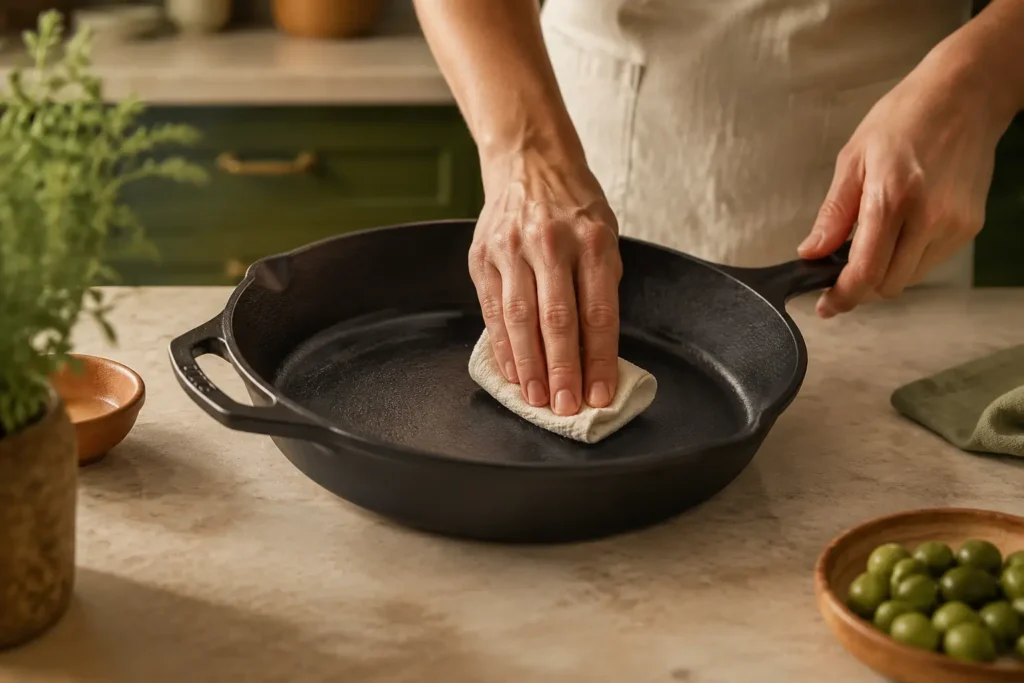
Step 3: Apply a whisper-thin coat of oil
Add about a teaspoon of neutral oil for a typical 10- to 12-inch skillet. Rub it across the cooking surface, walls, rim, exterior, handle, and base. Every exposed iron surface should receive a light film.
The exact quantity is less important than the final appearance: the pan should look evenly conditioned, not slick or pooled.
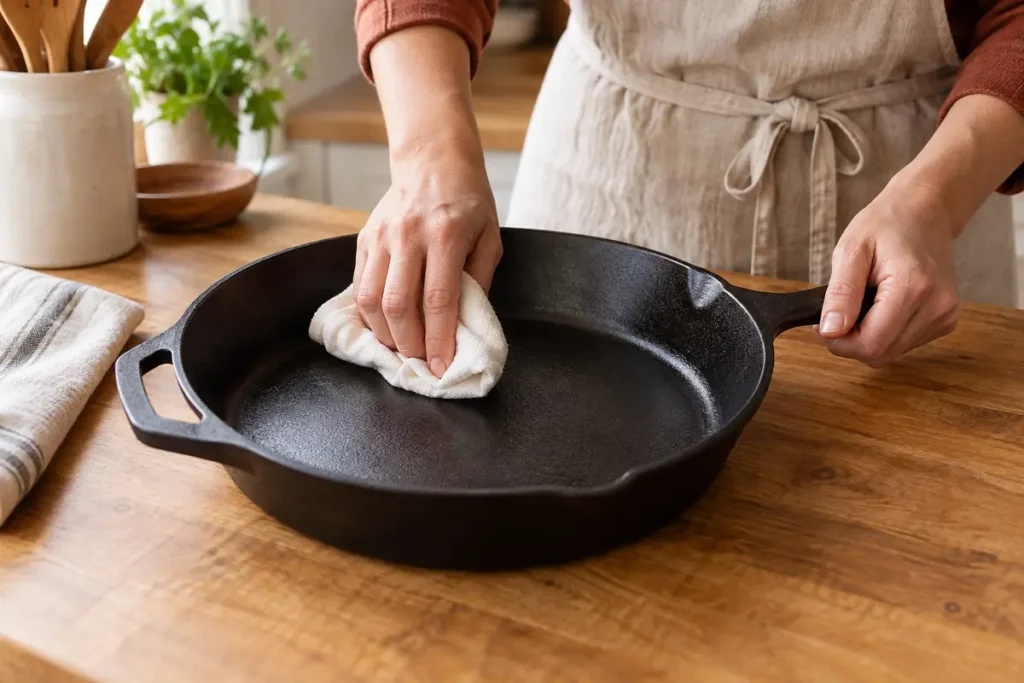
Step 4: Wipe away the visible oil
Take a clean cloth and buff the skillet as if you accidentally added oil and are trying to remove it. Keep wiping until wet streaks and shiny pools disappear. A microscopic film will remain even when the pan looks almost dry.
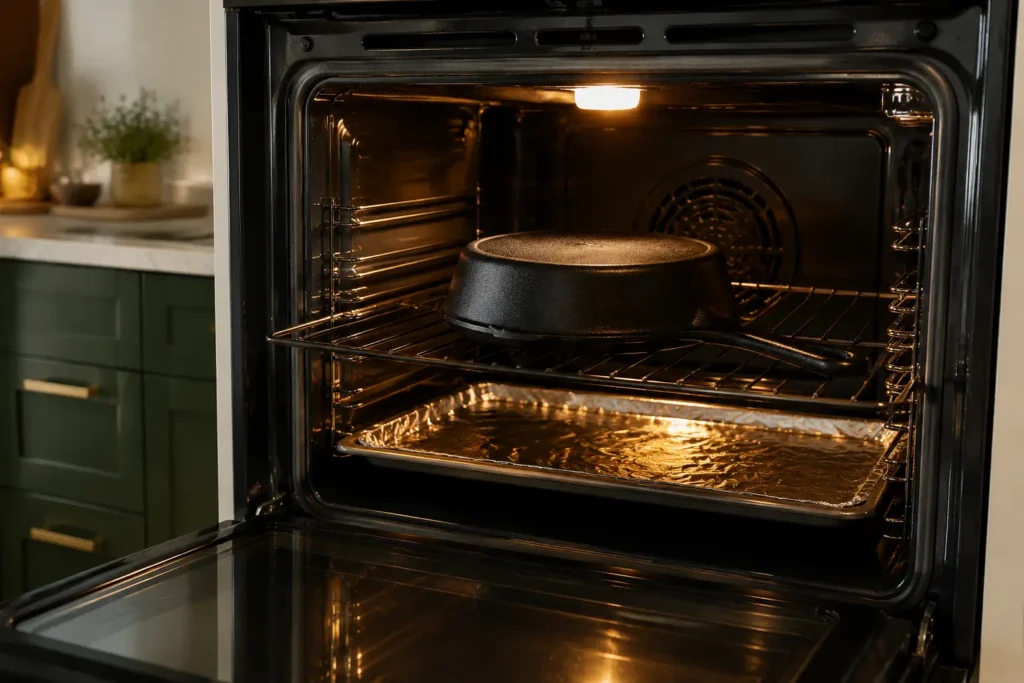
Step 5: Bake the skillet upside down
Preheat the oven to 450–500°F, unless your cookware maker recommends a different temperature. Place foil or a lined tray on a lower rack, then put the skillet upside down on the center rack so excess oil cannot pool on the cooking surface.
Bake for one hour with normal kitchen ventilation. Lodge’s official seasoning instructions also recommend the 450–500°F, one-hour method. If your chosen oil or cookware has different guidance, follow the manufacturer.
Step 6: Let it cool in the oven
Turn off the oven and leave the door closed while the skillet cools gradually. Do not handle hot cast iron with a damp towel, and do not shock it with cold water. The pan, including its handle, remains hot much longer than it appears.
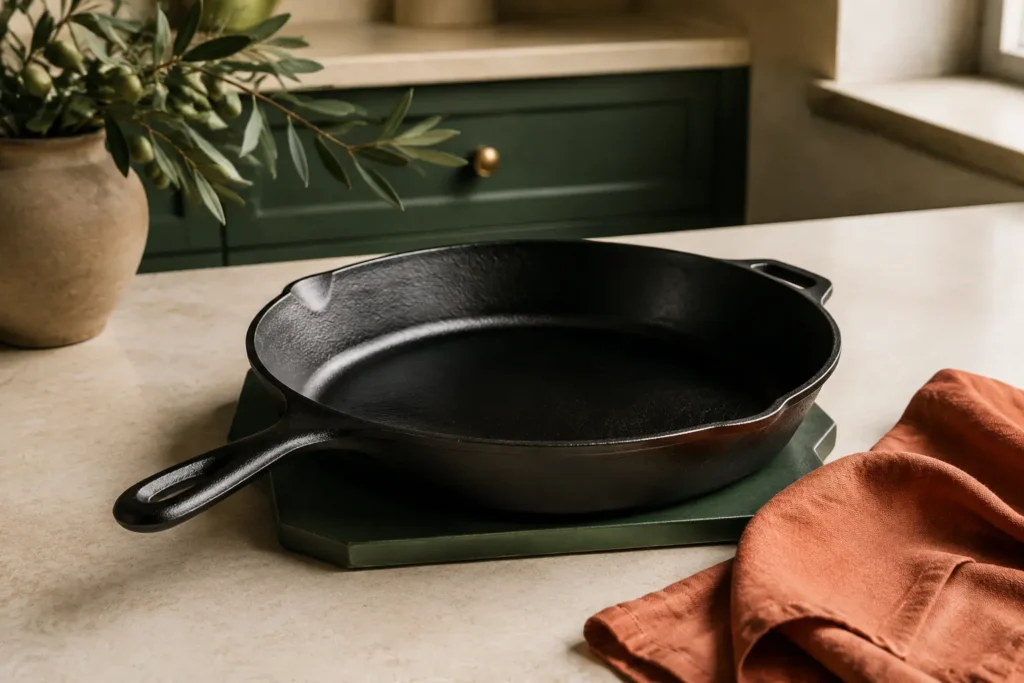
What the finished surface should look like
Once cool, the skillet should feel dry and smooth with an even satin-black or dark-brown finish. It should not feel tacky, smell strongly of uncured oil, or leave wet residue on a clean cloth.
One cycle is often enough for maintenance. A stripped or restored skillet may benefit from two or three separate thin cycles, but each layer must be wiped nearly dry before baking.
How many coats of seasoning do you need?
Use the fewest coats needed to create an even, protected surface. Factory-seasoned cookware usually needs no extra oven treatment before its first meal. A small dull patch may need one coat; a pan restored to bare iron may need several.
More coats are not automatically better. Thick, rushed layers can flake. Thin coats followed by regular cooking generally produce a more durable finish.
Which oil is best for seasoning cast iron?
A refined, neutral cooking oil is practical because it spreads easily and tolerates high oven temperatures. The following options are commonly suitable:
| Oil | Good choice? | Practical note |
|---|---|---|
| Canola or vegetable oil | Yes | Affordable, neutral, and widely available. |
| Grapeseed oil | Yes | Spreads thinly; choose a refined version. |
| Sunflower oil | Yes | A neutral refined oil suitable for high heat. |
| Butter or whole animal fat | Not ideal for oven seasoning | Contains solids and can create an uneven or perishable residue. |
You do not need an expensive specialty oil. Technique—especially wiping away excess—is more important than chasing a single “perfect” oil.
Fix common cast-iron seasoning problems
Sticky or blotchy patches
Too much oil was left on the pan, or the coating did not receive enough time and heat to cure. Wash away any loose residue, dry the skillet, apply a much thinner coat, and repeat one proper oven cycle.
Heavy smoke
A faint hot-oil smell can occur, but heavy smoke suggests excess oil, food residue, or a temperature unsuitable for the product. Turn off the oven if conditions feel unsafe, ventilate the room, and allow the cookware to cool before checking it.
Black flakes
Flaking usually comes from thick, poorly bonded buildup or burned-on food. Remove only the loose material with a brush or coarse salt, rinse, dry, and add a thin new coat if bare iron is visible.
Orange rust
Scrub off the rust, wash and dry the pan completely, then season the exposed iron promptly. Deep pitting, warping, or structural cracks deserve professional assessment before the cookware is used again.
Do
- Use very thin coats
- Dry the pan immediately
- Preheat gradually when cooking
- Store with airflow
Avoid
- Long soaking
- The dishwasher
- Cold water on very hot iron
- Storing the pan while damp
Everyday cleaning keeps seasoning strong
- Let the pan cool until it is safe to handle.
- Wash by hand with warm water and mild soap when needed.
- Use a pan scraper or nonabrasive brush for stuck food.
- Dry immediately and warm briefly to remove hidden moisture.
- If the surface looks dry, rub on one drop of oil and buff away the excess.
Occasional acidic cooking is usually manageable on established seasoning, but long tomato- or wine-based cooks are easier in enameled cast iron or stainless steel while a new coating develops.
What to cook after seasoning
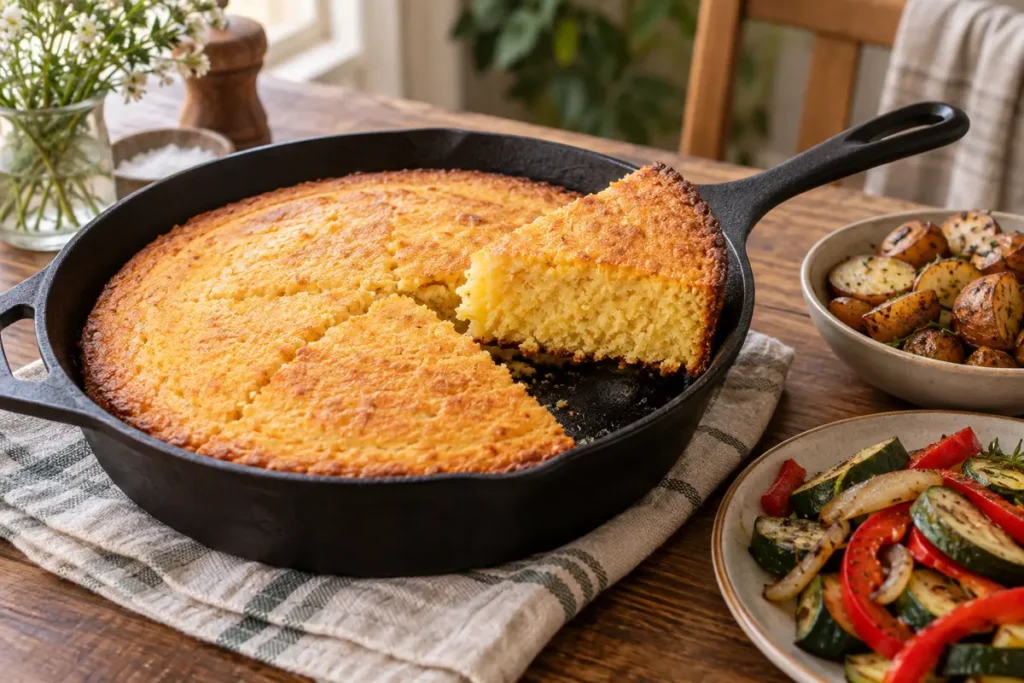
Start with forgiving foods that use a little fat: sautéed vegetables, roasted potatoes, cornbread, grilled sandwiches, or seared meat. Regular cooking gradually builds the surface. Save long acidic recipes and very delicate low-fat foods for later.
Cast-iron safety and storage
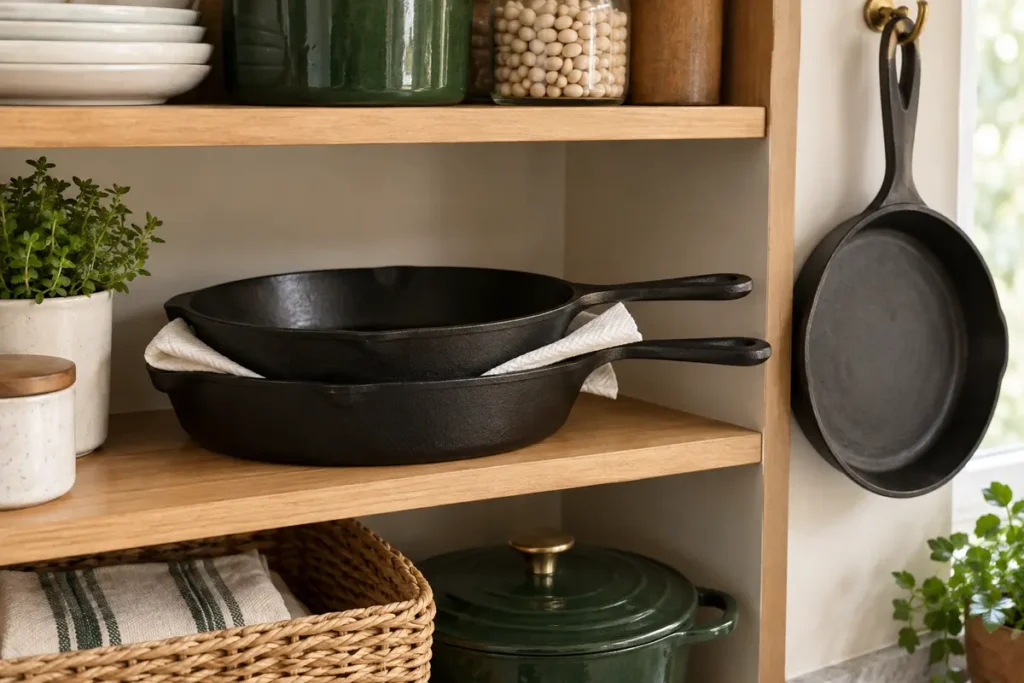
Cast iron is heavy, and the handle gets as hot as the pan. Use dry heat protection, keep the skillet stable, and make sure oven racks can support it. Store the pan completely dry with airflow; a folded paper towel between nested pans can absorb trace moisture and protect the finish.
Frequently asked questions
What oil is best for seasoning cast iron?
Canola, vegetable, grapeseed, and refined sunflower oil can all work well. Choose a neutral refined oil, apply very little, and wipe the skillet almost dry before baking.
Why is my cast iron sticky after seasoning?
Sticky patches usually mean too much oil remained on the pan or the coating did not cure completely. Clean away loose residue, apply a thinner coat, and repeat the heating cycle.
How often should cast iron be seasoned?
Season it when bare iron, rust, persistent sticking, or a dry patch appears. Routine cooking, prompt drying, and an occasional tiny maintenance coat usually keep the finish healthy.
What temperature should I use to season cast iron?
Many manufacturers recommend 450–500°F for about one hour. Follow the instructions for your cookware and oil if they specify a different temperature.
Can you use soap on seasoned cast iron?
Yes. A small amount of modern mild dish soap is suitable for routine hand-washing. Avoid prolonged soaking, the dishwasher, and aggressive daily scrubbing.