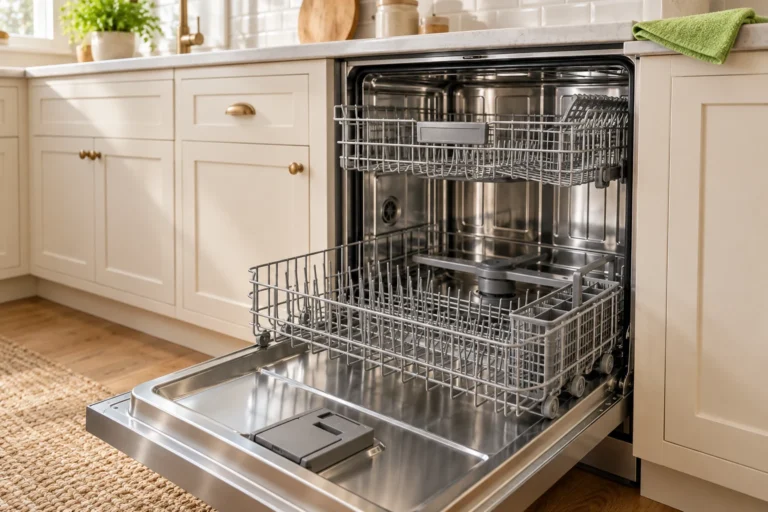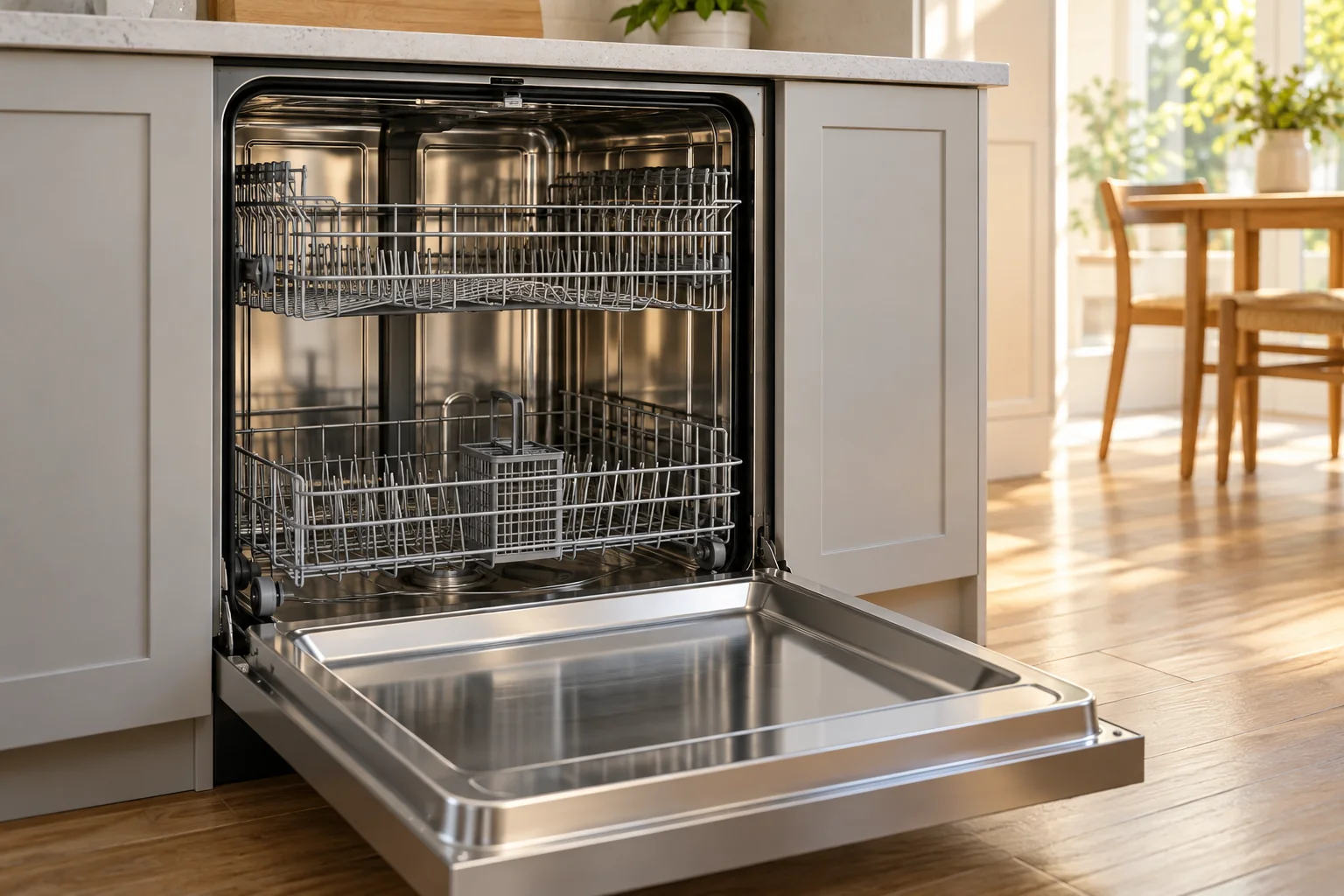
Opening the dishwasher to find dirty water at the bottom is frustrating, but it does not automatically mean the pump has failed. A blocked filter, restricted hose, or problem at the kitchen sink connection can interrupt the drain path.
Quick answer: what to check first
If your dishwasher is not draining, confirm the cycle has finished, then use your model’s Cancel/Drain function once. If water remains, disconnect power before inspecting the filter. Next check the sink or disposal, air gap if fitted, and accessible drain hose. Stop if you find a leak, electrical symptoms, or a blockage you cannot reach safely.
This guide covers basic checks for built-in dishwashers. It draws on Bosch and Whirlpool support guidance, linked below. Your model’s owner’s manual takes priority for controls, filter removal, pump access, and installation requirements. The illustrations are AI-generated editorial images, not model-specific repair photographs.
Is a little water in the dishwasher normal?
On some models, a small amount of water remains in the recessed filter or sump area to keep seals moist. Whirlpool describes this as normal for the models covered by its standing-water guidance. Do not use one universal depth measurement for every dishwasher.
Water spread across the tub floor after a completed cycle, repeated dirty-water backup, or water approaching the door opening needs attention. Note whether the water never leaves or drains and then returns: that distinction helps narrow the next check.
Match the symptom to the next check
| What you notice | Where to look first | Next action |
|---|---|---|
| Water remains after an interrupted cycle | Cycle status | Follow the manual’s Cancel/Drain procedure. |
| Food residue around the filter | Removable filter | Disconnect power and clean it. |
| Sink is also draining slowly | Shared drain or disposal | Address the sink blockage first. |
| Problem began after installation | Hose routing and disposal inlet | Ask the installer to check both. |
| Water drains, then returns | Backflow protection or drain connection | Have the routing and connection checked. |
| Grinding, persistent humming, or repeated errors | Possible obstruction or component fault | Stop repeated attempts and arrange diagnosis. |
These are clues, not proof of a particular failed part. Avoid ordering a replacement pump based only on a noise or error code.
Before you start: make the work area safe
- For a normal Cancel/Drain attempt, leave the appliance fully assembled and follow its instructions. Do not run it if it is leaking, smells hot, or has electrical damage.
- Before reaching inside, disconnect power at the circuit breaker or a safely accessible plug. The control-panel Off button is not electrical isolation.
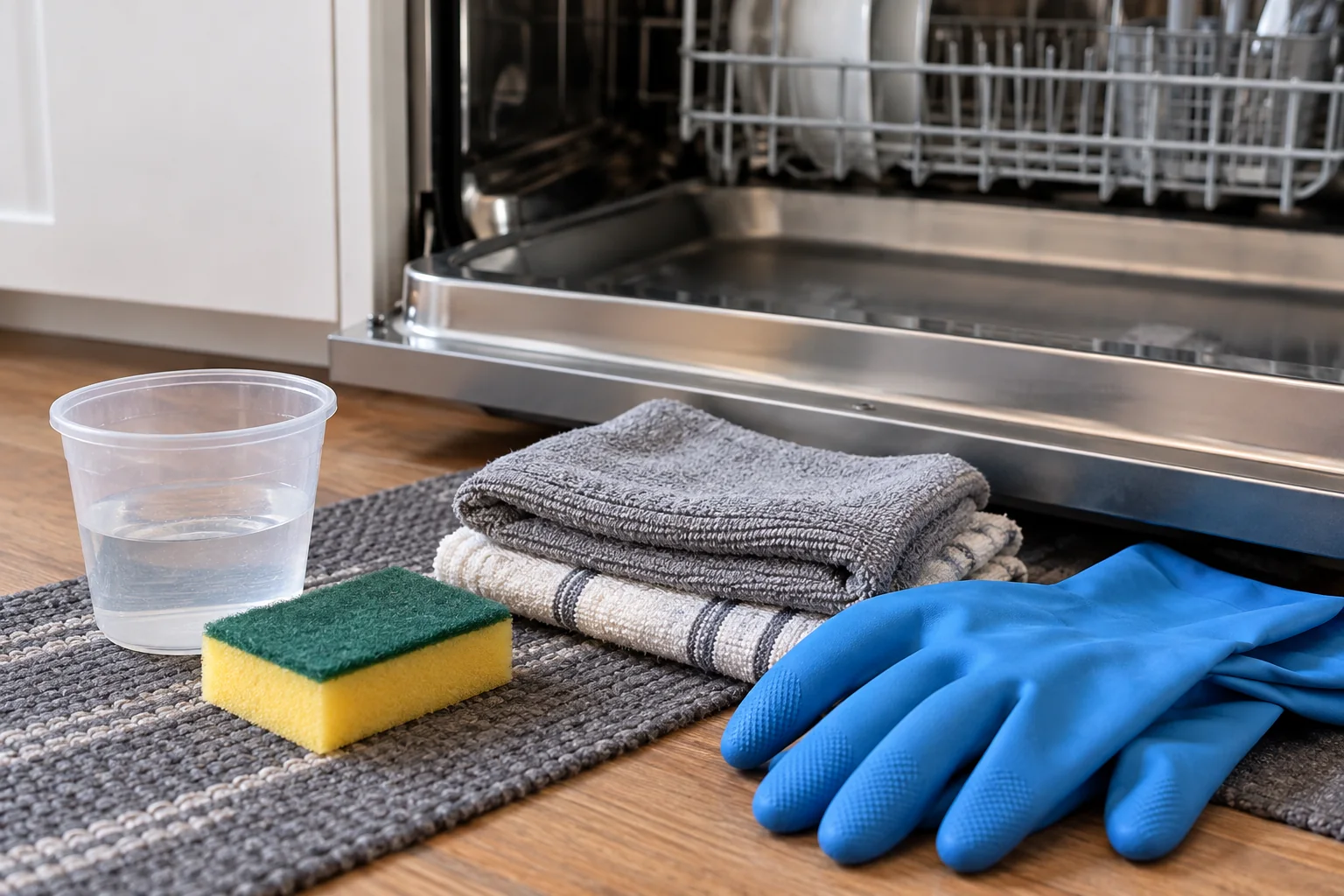
- Let hot water cool. Protect the floor with towels and use a cup, bucket, and sponge to remove standing water.
- Wear protective gloves and use a flashlight. Broken glass may be hidden beneath cloudy water; never sweep blindly with your fingers.
- Leave panel removal, wiring checks, and moving a built-in appliance to a qualified person. Shut off the water supply before disconnecting plumbing.
1. Confirm the cycle has finished
A paused cycle is different from a completed cycle that failed to drain. Check the display, door latch, and manual before assuming there is a clog. Button combinations and hold times vary, so use the instructions for your exact model.
Try the specified drain command once. If it empties normally, monitor the next complete cycle. If it does not, move to inspection rather than repeatedly restarting a full wash and adding more water. Record any displayed code before resetting anything.
2. Clean the removable dishwasher filter
Bosch’s drainage guide identifies debris in the filter or pump as a common cause. Start with the part your manual permits you to remove.
- With power disconnected and the water cool, remove the lower rack.
- Unlock and lift out the filter using the model’s instructions. Do not force a fixed screen.
- Rinse the removable pieces under running water. Use a soft brush for trapped residue; avoid abrasive pads.
- Inspect the accessible recess with a flashlight. Remove only visible debris you can reach safely.
- Reassemble and lock the filter securely before testing. Do not operate the dishwasher without it.
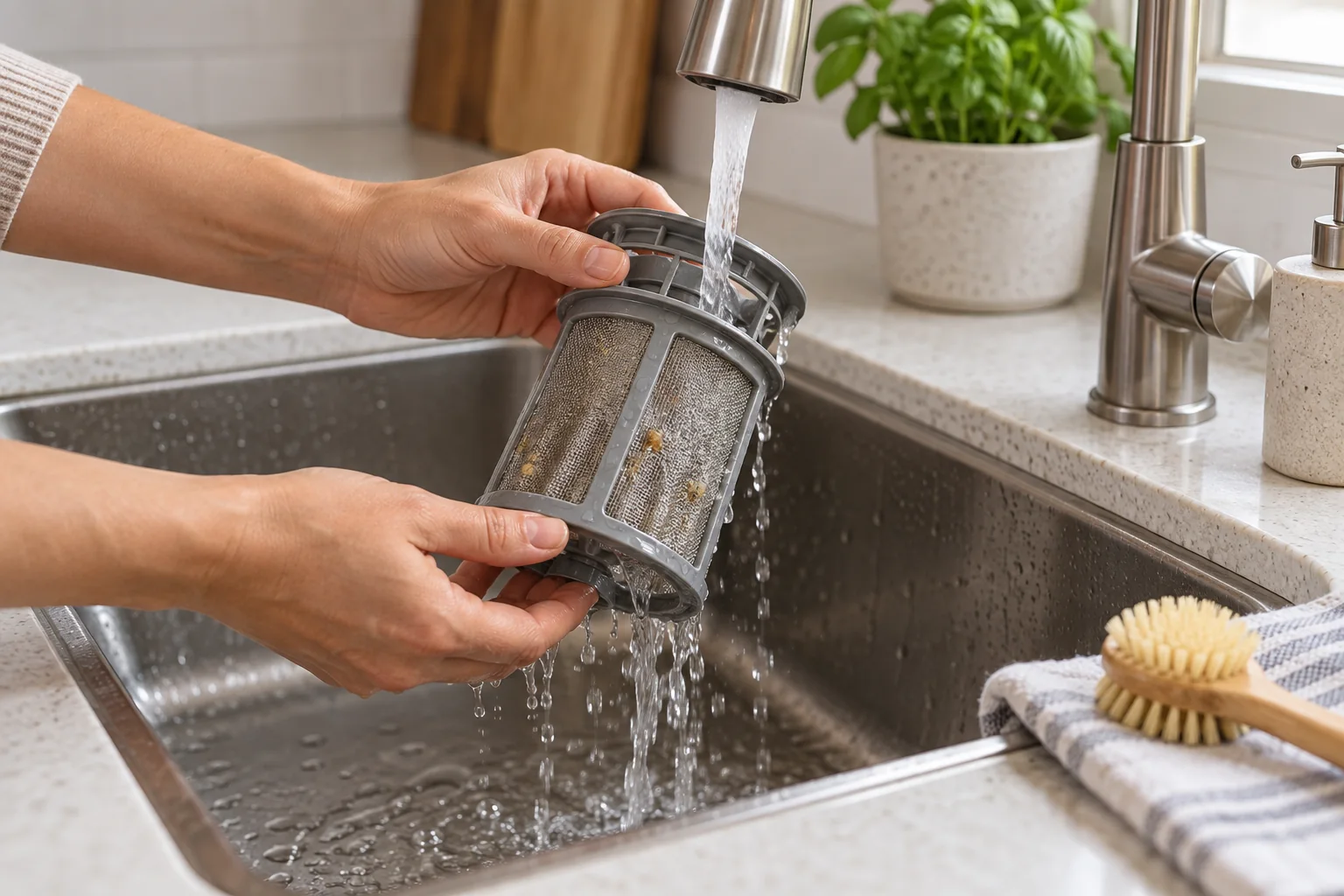
For a fuller cleaning routine, see our step-by-step dishwasher filter maintenance guide.
3. Check the kitchen sink and garbage disposal
A dishwasher connected to the sink drain can be affected by a blockage beyond the appliance. If the sink is already backed up, avoid adding more water. A plumber may be the right first call.
If you have a normally operating disposal and the sink can drain, clear it using its manufacturer’s normal operating procedure. Never put a hand inside. A jammed, leaking, or humming disposal needs its own troubleshooting before you try the dishwasher again.
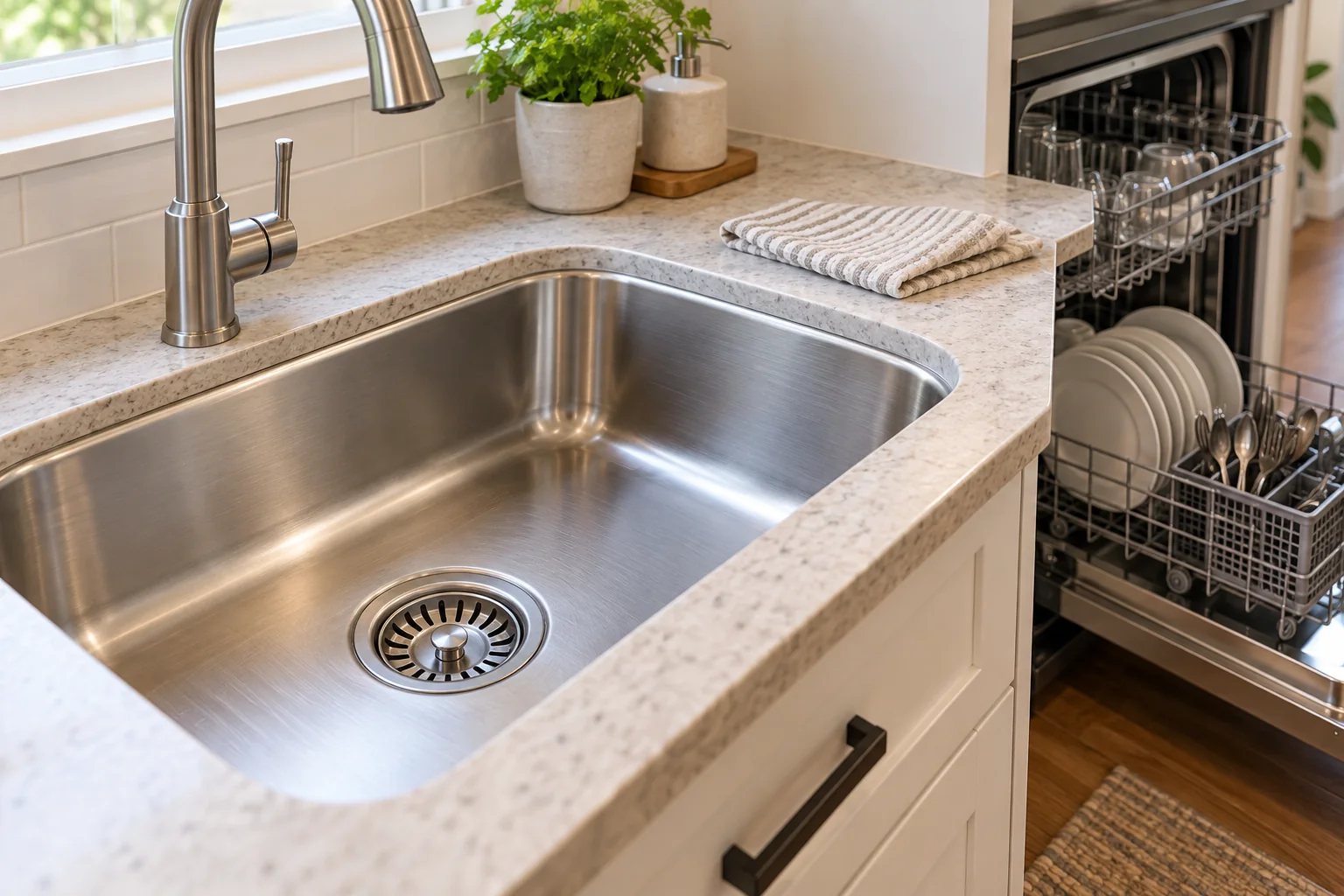
Did the problem start after a new disposal was fitted?
Many disposals have a knockout plug at the dishwasher inlet. If it was left in place, wastewater cannot pass through. Whirlpool highlights this in its new-installation drainage guide. Ask the installer to verify the inlet rather than dismantling it without the disposal’s instructions.
4. Inspect the air gap, if your sink has one
The air gap is usually a small fitting beside the faucet. Not every installation uses one. Check and clean it according to the air-gap manufacturer’s directions, including any removable cover. Do not force unfamiliar parts.
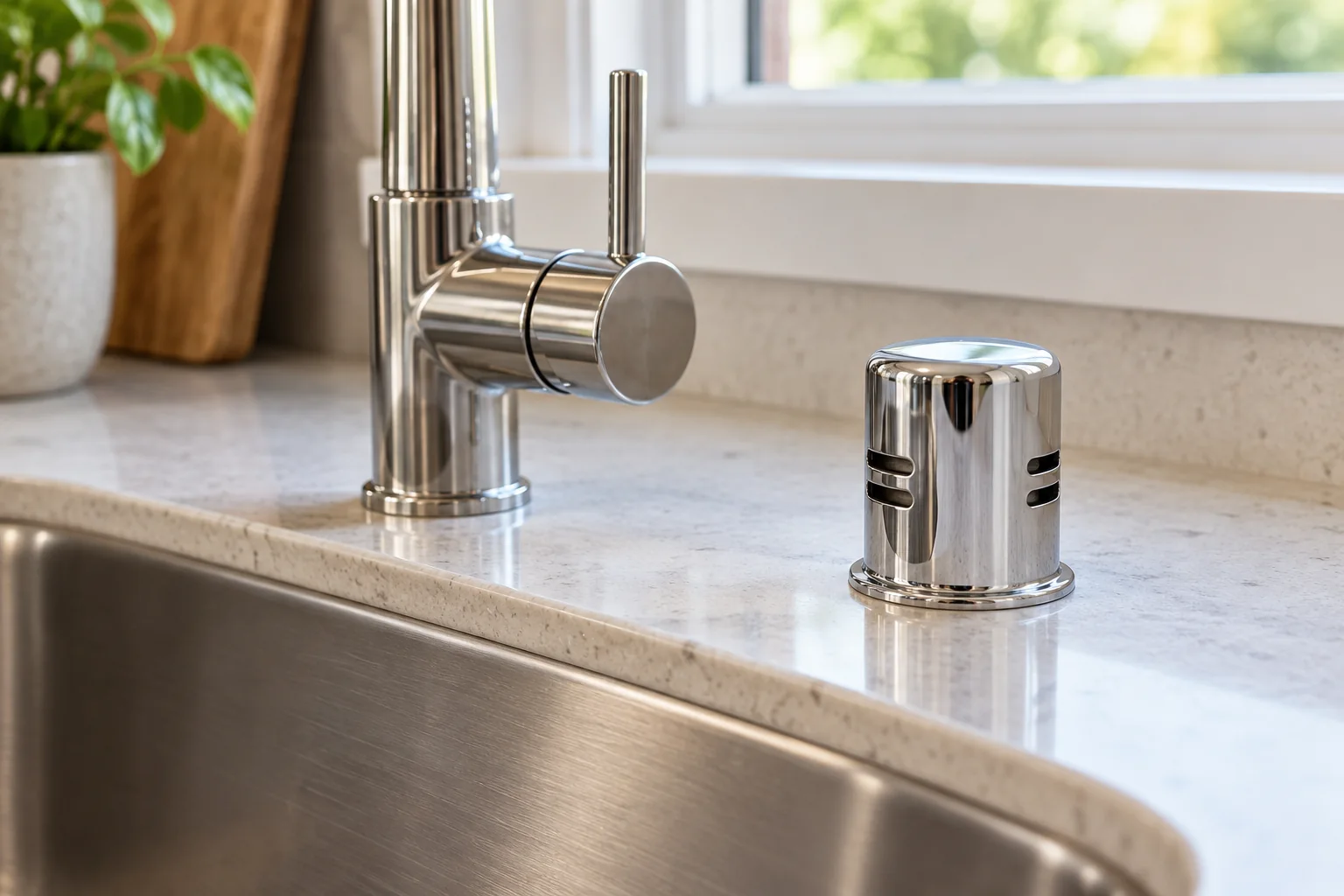
Water spilling out of it during draining can point to a restriction downstream toward the sink connection. If clearing accessible debris does not resolve the problem, have that drain path checked. Do not seal the vent or remove the air gap as a shortcut.
5. Look for a kinked or incorrectly routed drain hose
With power isolated, inspect the visible hose under the sink. Stored items can press against it; tight bends can restrict flow. Move objects away and look for crushing, splits, or damp connections. Do not tug on the hose or pull the dishwasher out to reach a hidden section.
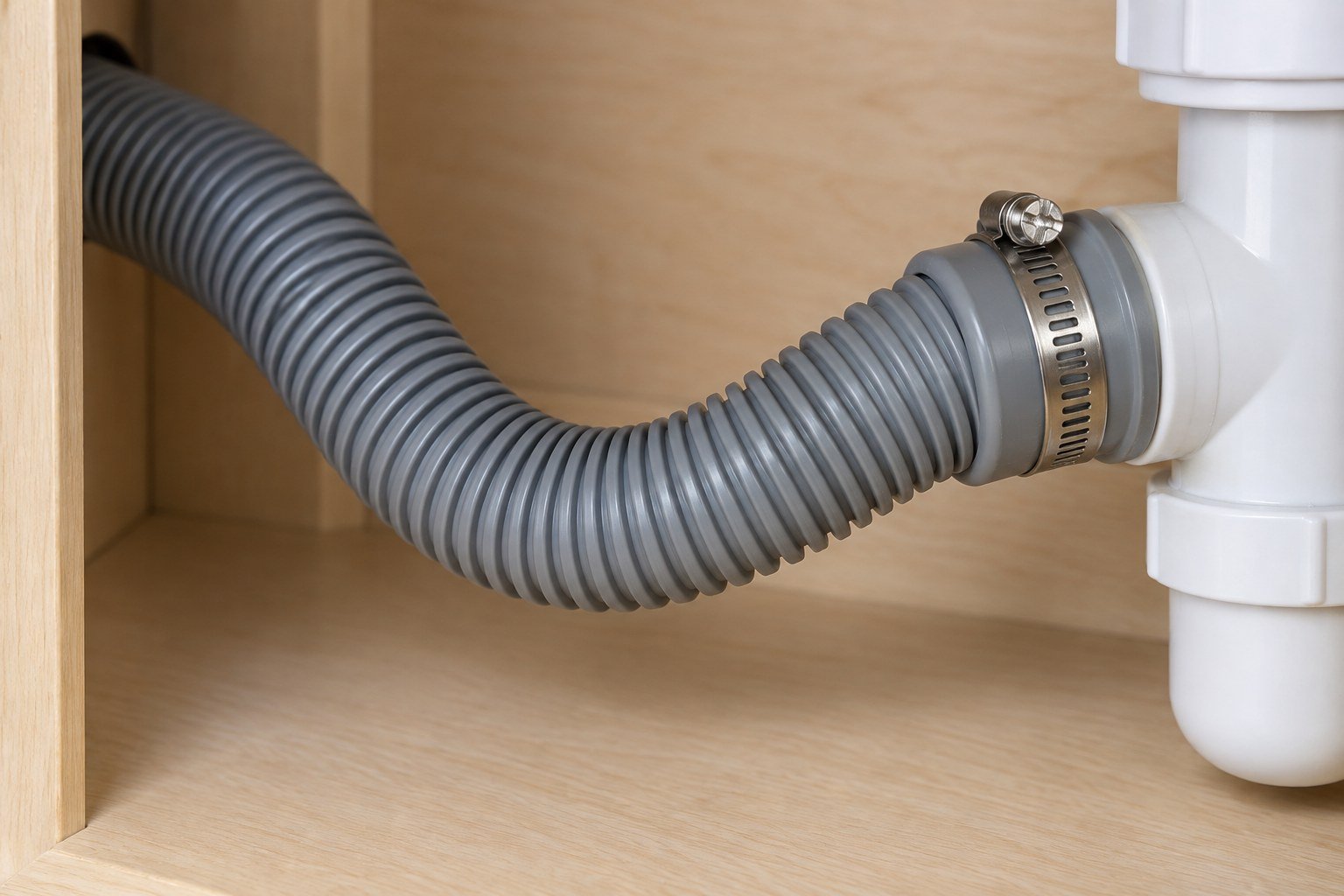
Bosch’s troubleshooting guidance includes checking for hose kinks and blockages. If a hose needs disconnecting or replacing, use the model’s service instructions or arrange help; trapped water may spill.
Drain routing matters too. Follow the appliance’s installation instructions and applicable local requirements for a high loop or air gap. Do not assume they are interchangeable in every installation. Whirlpool’s installation checks explain why the hose should be inspected when drainage trouble starts immediately after fitting.
6. Check for excessive suds
Hand-washing dish soap does not belong in a dishwasher. If the tub contains foam, stop the cycle and let the suds settle. Follow your model’s guidance for clearing oversudsing, and use only detergent intended for automatic dishwashers at the recommended dose.
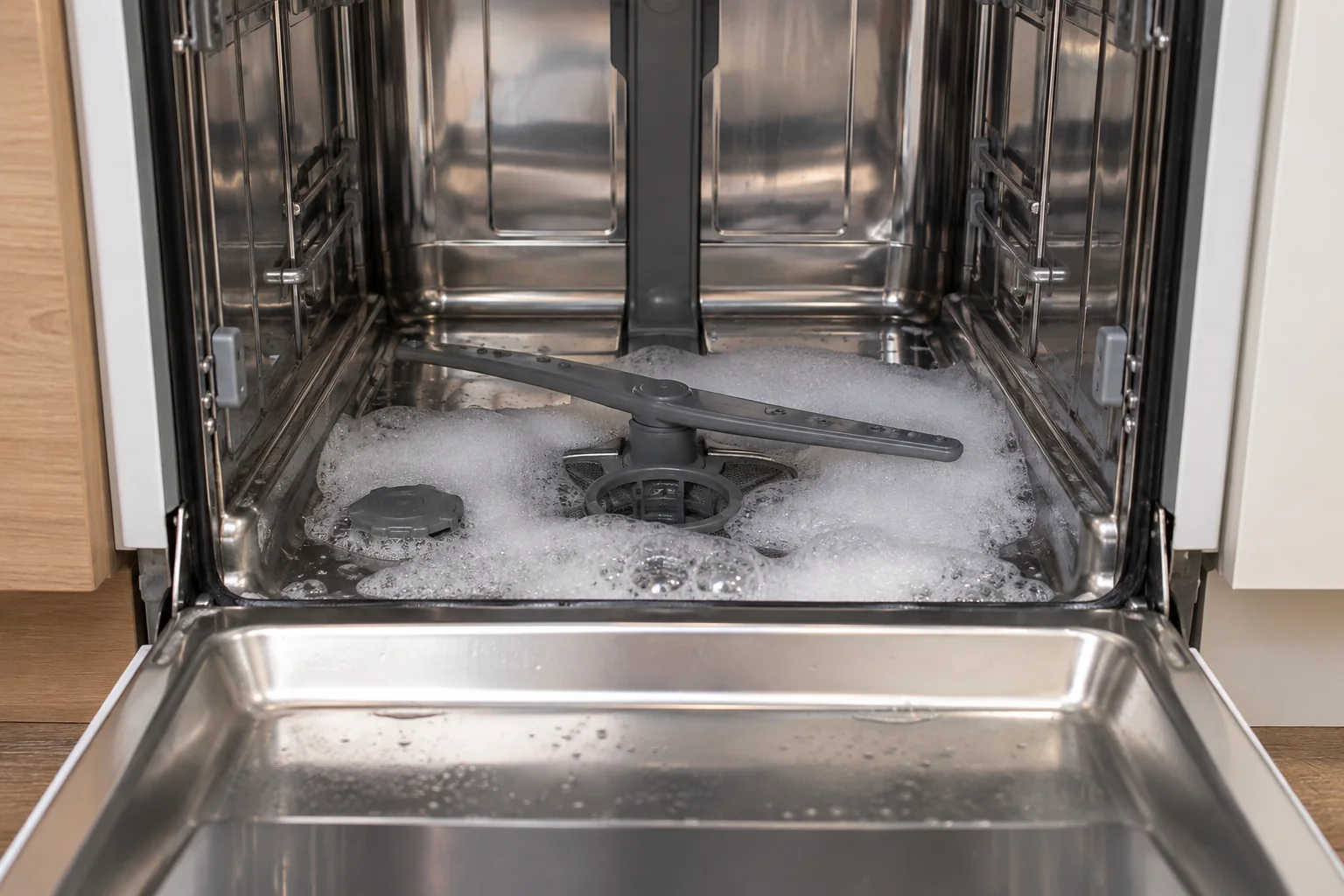
Do not keep adding detergent or start repeated wash cycles to chase the foam away. Also avoid chemical drain openers inside the appliance: Whirlpool’s current product-help guide warns that they can damage components and create hazards.
7. Treat pump access as a model-specific step
Some Bosch models allow inspection beneath a removable pump cover after the filter is removed. Others use different arrangements. Only attempt this if your owner’s manual explicitly describes it as a user maintenance task, with power disconnected.
Never force a cover, reach blindly into an impeller, or remove an electrical pump assembly based on a generic guide. A cover that will not reseat securely, inaccessible glass, or continued failure after the basic checks is a reason to stop.
Test the result before returning to normal use
Reinstall all removed user-serviceable parts, clear tools away, and restore any supply you isolated. With everything assembled, run the manual’s short test or rinse cycle while you remain nearby. Check the floor and accessible connections for leakage.
After the cycle, confirm the broad pool has gone and observe whether water returns later. If it does, tell the technician that it initially drained—this is more useful than simply reporting “standing water.” Stop immediately if a leak appears.
When to call a plumber or appliance technician
- Plumber or installer: the sink also backs up, water escapes from the air gap, or the problem began after plumbing or installation work.
- Appliance technician: the sink drains normally but the dishwasher still fails after the accessible checks, or there are recurring codes, unusual noises, or suspected pump trouble.
- Stop using it: burning smells, damaged wiring, repeated breaker trips, or active leakage need prompt professional attention.
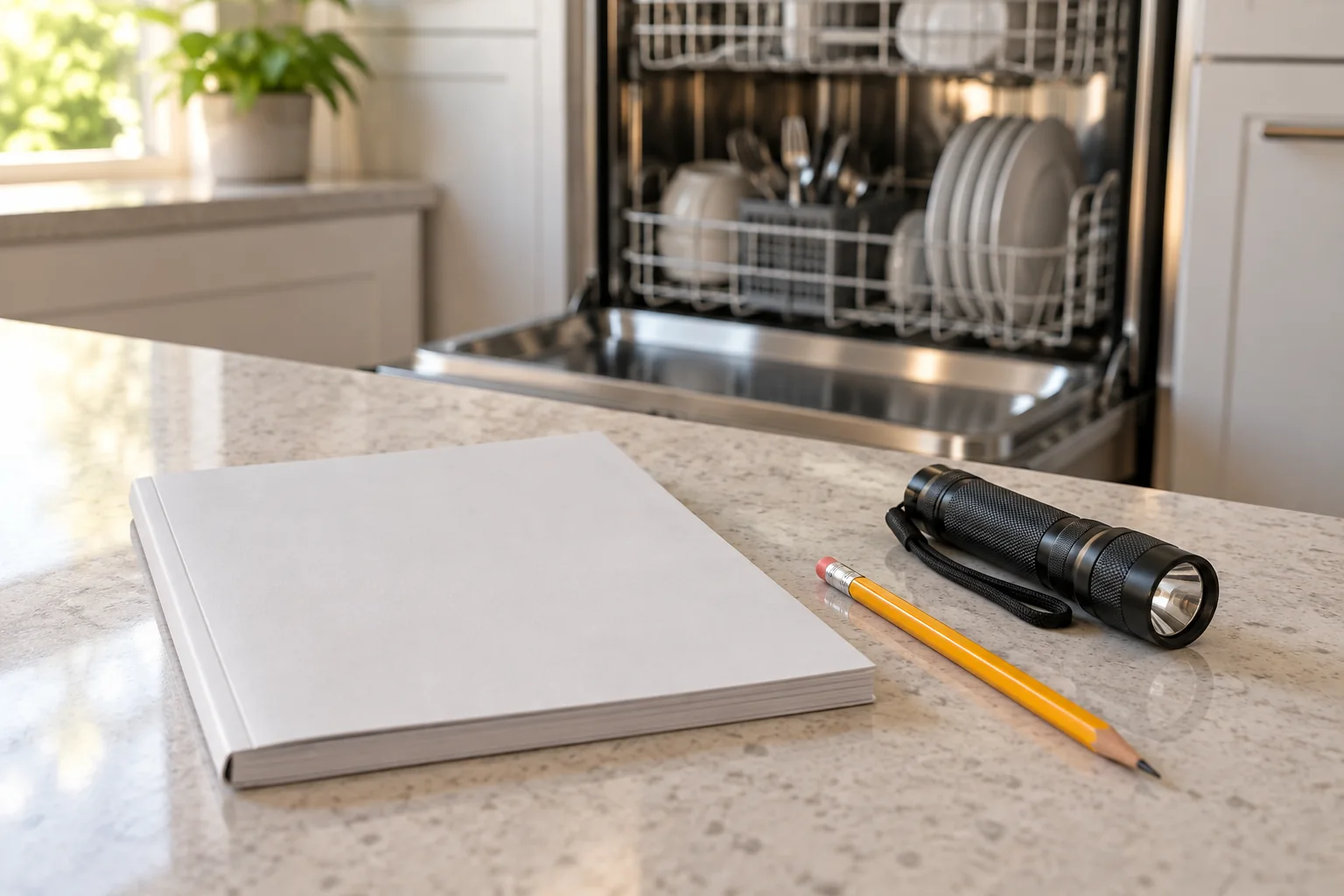
Record the model number, when the problem started, whether water ever leaves, and what you already checked. A short factual record helps avoid repeating the same troubleshooting.
Reduce the chance of another blockage
Scrape large food scraps into the bin, remove loose labels from containers, and inspect the filter at the interval recommended for your usage and model. Keep under-sink storage clear of the hose. Follow the manual’s cleaning routine; a cleaning product does not repair a blocked drain or failed component. Add these checks to your kitchen appliance maintenance routine.
Frequently asked questions
Can I run a dishwasher with standing water?
A small amount confined to the sump may be normal. If dirty water covers the tub floor, avoid another full wash until you have checked the cause. Use only the model’s drain procedure if the machine is otherwise safe to operate.
Will resetting the dishwasher clear a clog?
A reset may resolve an interrupted control sequence, but it cannot remove food debris, straighten a hose, or remove a disposal inlet plug. Record any error first and use the manual’s reset instructions.
Will vinegar and baking soda fix it?
They are not a substitute for identifying the obstruction. Skip improvised chemical mixtures and boiling water. Use only cleaning products and methods approved for your appliance.
Why is it still not draining after I cleaned the filter?
The restriction may be farther along the hose or sink connection, or a pump or control fault may need diagnosis. Continue with the accessible checks above; do not assume a new pump is the next step.
Editorial note: This is a researched maintenance guide, not a claim of hands-on testing on your appliance. Manufacturer resources were checked in October 2026. Consult your exact model’s manual before removing parts.
Kitchen conditions and products vary. Follow manufacturer guidance and consult a qualified professional when safety or specialist work is involved.