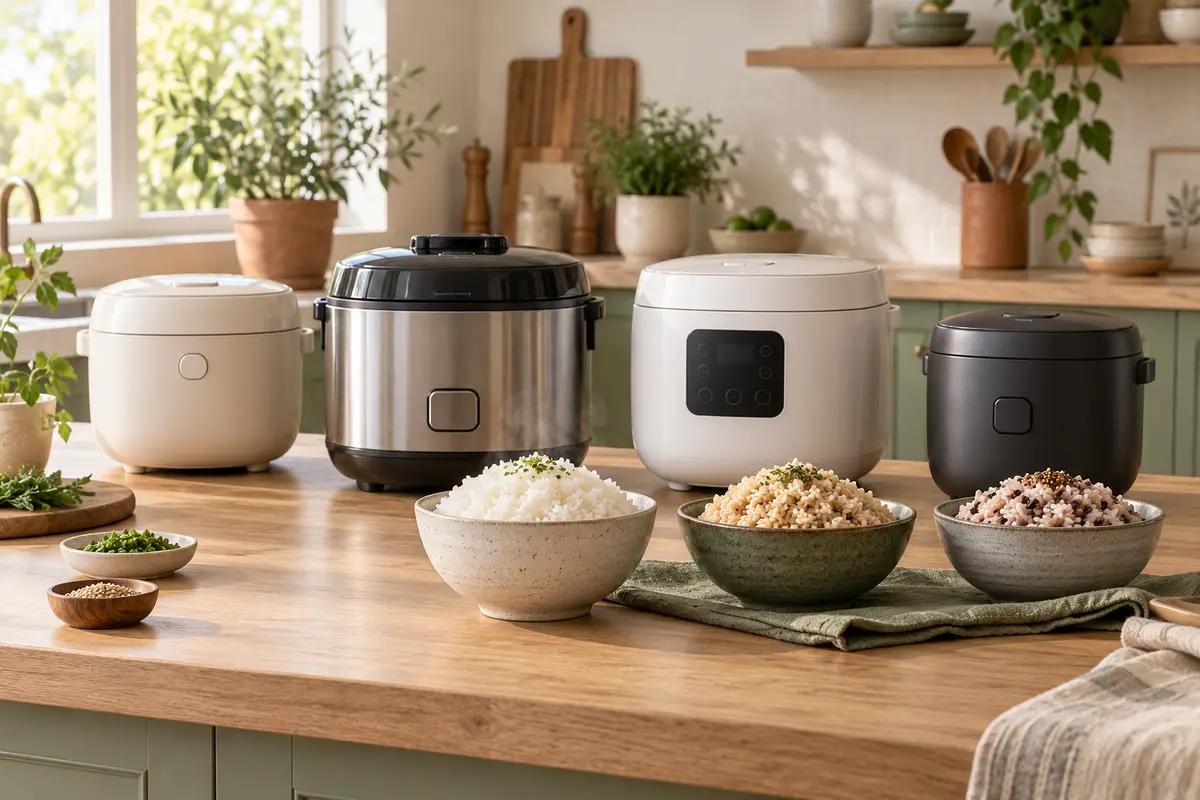
The best rice cooker for most kitchens in 2026 is the Hamilton Beach 37548: it makes notably fluffy white rice, handles brown rice well, serves anything from a couple of portions to a family-size batch, and usually costs far less than fuzzy-logic competitors. But it is not the right machine for everyone. A solo cook may be happier with the tiny Dash Mini, while a family that meal-preps will get more value from the 20-cup Instant Pot Grain and Rice Cooker.
Rice cookers look simple, yet capacity labels, inner-pot coatings and keep-warm claims make them surprisingly difficult to compare. This guide narrows the field to seven genuinely different picks and explains where each one earns its place. We compare cooking results, useful capacity, inner-pot material, cleaning, keep-warm performance, counter space and realistic street price—not the number of buttons on the control panel.
Quick answer: Choose the Hamilton Beach 37548 for the best mix of rice quality and value, the Dash Mini for one person, the Instant Pot 20-Cup for families and batch cooking, or the Aroma ARC-914SBDS if an uncoated stainless-steel inner pot matters more than perfectly nonstick release.
Editorial note: Kitchen Epic researched current manufacturer specifications, manuals and recent independent testing for this guide; we did not conduct a side-by-side laboratory test of all seven machines. Product details and typical U.S. prices were checked on September 5, 2026. Prices and model suffixes can change, so verify the current listing before buying. No manufacturer paid for placement or supplied a product for this article.
The best rice cookers of 2026 at a glance
| Pick | Best for | Useful capacity | Inner pot | Cooking results | Cleaning | Keep warm | Typical price* |
|---|---|---|---|---|---|---|---|
| Hamilton Beach 37548 | Best overall and budget full-size | 2–14 cups cooked | Coated nonstick | Fluffy white rice; excellent brown rice | Easy pot; hinged lid needs wiping | Automatic | About $65–80 |
| Zojirushi Neuro Fuzzy NS-ZCC10 | Most consistent texture | 5.5 cups uncooked; about 10 cooked | Nonstick-coated aluminum | Exceptionally even and forgiving | Removable pot and inner lid | Automatic, extended and reheat | About $225–280 |
| Dash Mini | One person and tiny kitchens | 2 cups cooked | Coated metal; listing varies | Very good small batches | Few parts; wipe fixed lid | Automatic; can dry edges | About $25 |
| Instant Pot 20-Cup Grain & Rice | Families and batch meal prep | 20 cups cooked | Nonstick pot; stainless CarbReduce basket | Very good jasmine and short-grain | Dishwasher-safe removable parts | Up to 10 hours | About $80–100 |
| Cuckoo CR-0675F | Custom texture and GABA rice | 6 cups uncooked; 12 cooked | Nonstick-coated | Strong brown/multigrain results; tune jasmine | Detachable lid and steam-clean cycle | Warm and reheat | About $140 |
| KitchenAid KGC3155BM | Foolproof premium automation | 8 cups cooked | Ceramic nonstick | Reliable with minimal measuring | Removable pot/tank; more parts | Up to 6 hours | About $260–400 |
| Aroma Select Stainless ARC-914SBDS | Uncoated stainless pot | 8 cups cooked | Uncoated 304 stainless steel | Good everyday rice; may stick | Durable pot; soaking helps | Automatic | About $50–70 |
*Typical U.S. price ranges observed September 5, 2026; sales and availability vary.
How we chose these seven rice cookers
Our shortlist began with current models that fill a clear household need. We cross-checked official specifications with the June 2026 update to Serious Eats’ multi-model rice-cooker testing, then compared the details that affect daily ownership:
- Cooking results: even doneness, separated grains and reliable performance across white, jasmine and brown rice.
- Capacity: stated in cooked or uncooked cups, because those are not interchangeable.
- Inner-pot material: traditional nonstick, ceramic nonstick or uncoated stainless steel.
- Cleaning: removable lids, dishwasher-safe components, steam-clean cycles and places where starch collects.
- Keep warm: not just whether it exists, but whether rice remains pleasant rather than drying around the edges.
- Value and footprint: what you gain for the price and how much permanent counter space the cooker demands.
We excluded models that offered lots of settings but produced weak or inconsistent rice in recent independent testing. A high price did not guarantee a place, and an inexpensive cooker could win if it performed its core job well.
1. Hamilton Beach 37548 — best rice cooker overall
Best for: most households, value seekers and dependable brown rice
Capacity: 2–14 cups cooked
Typical price: $65–80
The Hamilton Beach 37548 earns our top spot because it gets the fundamentals right without a premium price. In recent independent testing it produced especially fluffy, well-textured rice quickly, and its whole-grain program delivered near-perfect brown rice in under an hour. That is a meaningful advantage over bargain cookers that simply extend the same heating cycle and leave brown rice chewy.
Its 2-to-14-cup cooked range is unusually flexible. You can make a modest weeknight batch without owning a second mini cooker, yet it has enough room for family meals. Dedicated White Rice, Quick Rice, Whole Grain, Steam, Hot Cereal and Heat/Simmer programs cover the useful basics, while automatic warming and a programmable delay make it practical on workdays.
The tradeoff is refinement. The standard 37548 uses a coated nonstick pot, and the attached lid takes more care to wipe clean than a fully detachable lid. Very large batches can also dry or brown at the bottom if they sit on warm for too long. Hamilton Beach now sells closely named variants, including a 37548MN that advertises a PFAS-free ceramic nonstick pot, so check the exact model suffix rather than assuming every 37548 listing has the same coating.
- Why buy it: excellent rice quality for the money, useful size range, strong brown-rice program.
- Know before buying: fixed hinged lid; pot coating depends on the exact variant.
- Official details: Hamilton Beach 37548 product page.
2. Zojirushi Neuro Fuzzy NS-ZCC10 — best for consistent rice
Best for: frequent rice eaters who care about texture
Capacity: 5.5 cups uncooked, roughly 10 cups cooked
Typical price: $225–280
Zojirushi’s Neuro Fuzzy is the steady, forgiving option. Its microcomputer adjusts time and temperature when your measurements are slightly off, and the spherical pan encourages even heating. The result is consistently cooked rice across small and larger batches with less guesswork than a basic switch cooker.
The menu includes white rice with multiple texture choices, mixed rice, porridge, sweet rice, semi-brown, brown, rinse-free and quick cooking. Its automatic and extended keep-warm modes, plus a reheat function, are more useful for people who eat rice at different times of day than a simple indefinite warm setting. The removable inner lid and pot make routine cleaning manageable, though the coated aluminum pan should be hand-washed with a soft sponge to extend its life.
You are paying for consistency, not speed or a modern interface. It takes longer than the Hamilton Beach, plays audible melodies that not everyone enjoys, and occupies more counter space than a mini cooker. Still, for households that make rice four or five times a week, the dependable texture can justify the premium.
- Why buy it: highly consistent results, forgiving fuzzy logic, excellent keep-warm controls.
- Know before buying: expensive, slower, and the pot uses a nonstick coating.
- Official details: Zojirushi NS-ZCC10 product page.
3. Dash Mini Rice Cooker — best for one person
Best for: solo cooks, dorm rooms, RVs and the smallest counters
Capacity: about 2 cups cooked
Typical price: about $25
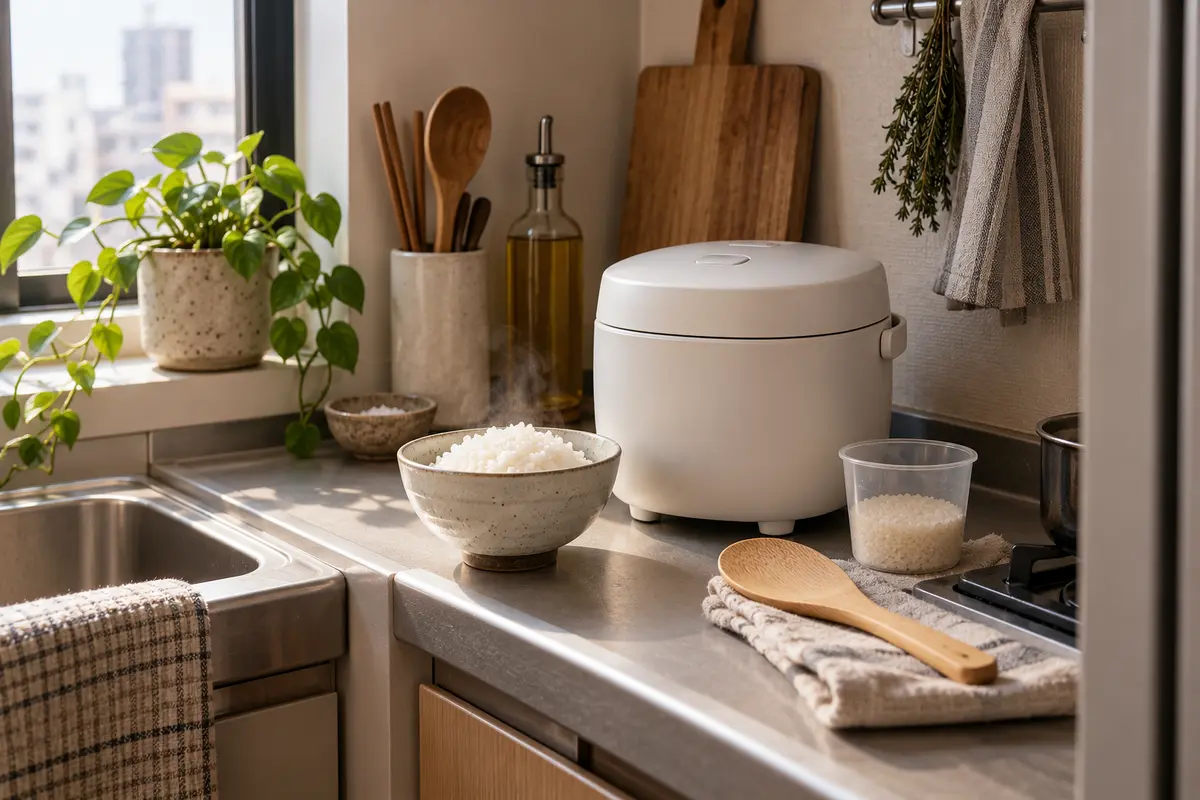
The Dash Mini solves a problem larger cookers cannot: making a genuinely small batch without creating a thin layer that dries out. It accepts about one cup of uncooked rice and yields roughly two cups cooked—enough for one generous bowl, two side servings or a small batch of leftovers.
There is one lever, no menu tree and almost no learning curve. Add rinsed rice and water, press Cook, and the unit switches to Keep Warm when finished. Independent testing found it surprisingly capable with jasmine and brown basmati rice for its size. Because the warm cycle can brown or dry the edges over time, it is better to eat the rice soon after cooking than to hold it all afternoon.
Current Dash listings are not perfectly consistent about the coating: some describe a conventional nonstick removable pot and others a ceramic nonstick finish. Confirm the exact model and color listing if coating chemistry matters to you. The small pot is easy to wash, but the fixed lid needs wiping after steamy recipes.
- Why buy it: tiny footprint, good one-person portions and one-touch operation.
- Know before buying: too small for meal-prep batches; long warming can dry the rice.
- Official details: Dash Mini Rice Cooker product page.
4. Instant Pot 20-Cup Grain and Rice Cooker — best for families
Best for: families, entertaining and weekly meal prep
Capacity: up to 20 cups cooked
Typical price: $80–100
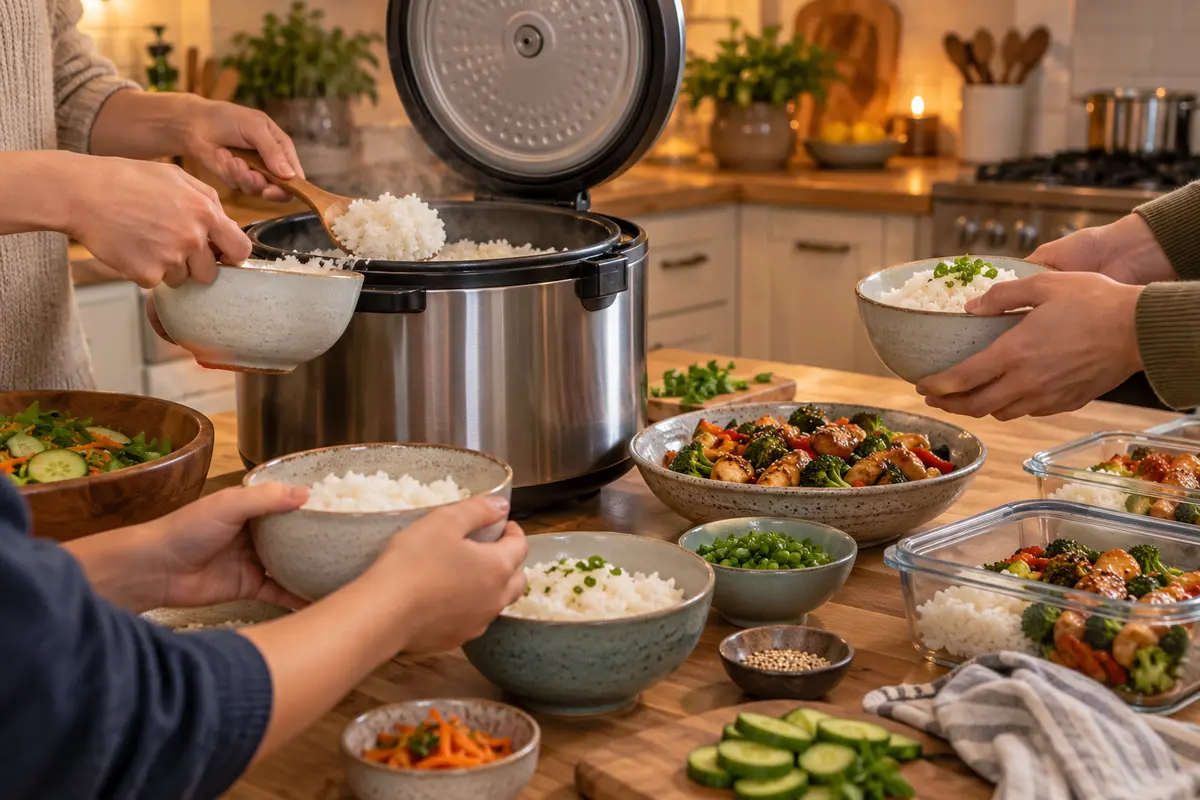
This dedicated Instant Pot cooker is not the familiar pressure cooker. It is a large grain-and-rice multicooker designed to produce up to 20 cooked cups, and recent testing found that it handled jasmine and Japanese short-grain rice very well. The size makes more sense for four or more people, freezer-meal prep or regular entertaining than for a couple who makes two servings at a time.
Presets cover white rice, brown rice, mixed grains and quinoa, along with sauté, steam and slow-cook functions. A nonstick cooking pot is standard, while a stainless-steel CarbReduce basket gives the machine another preparation option. Instant Brands says that cycle can reduce carbohydrates and sugar by up to 40 percent compared with traditional cooking, but also notes that the result varies with grain type and cooking time; treat it as an optional method rather than a medical or nutritional guarantee.
Cleaning is better than on many large hinged-lid cookers because the removable lid, cooking pot and accessories are dishwasher-safe according to the manufacturer. Keep Warm runs for up to 10 hours. The obvious drawback is scale: do not buy this model unless you have the storage space and routinely need its capacity.
- Why buy it: excellent large-batch value, versatile grain programs and easy-clean removable parts.
- Know before buying: oversized for one or two people; nonstick main pot.
- Official details: Instant Pot 20-Cup product page.
5. Cuckoo CR-0675F — best for brown rice customization
Best for: GABA rice, multigrains and cooks who like to tune texture
Capacity: 6 cups uncooked, 12 cups cooked
Typical price: about $140
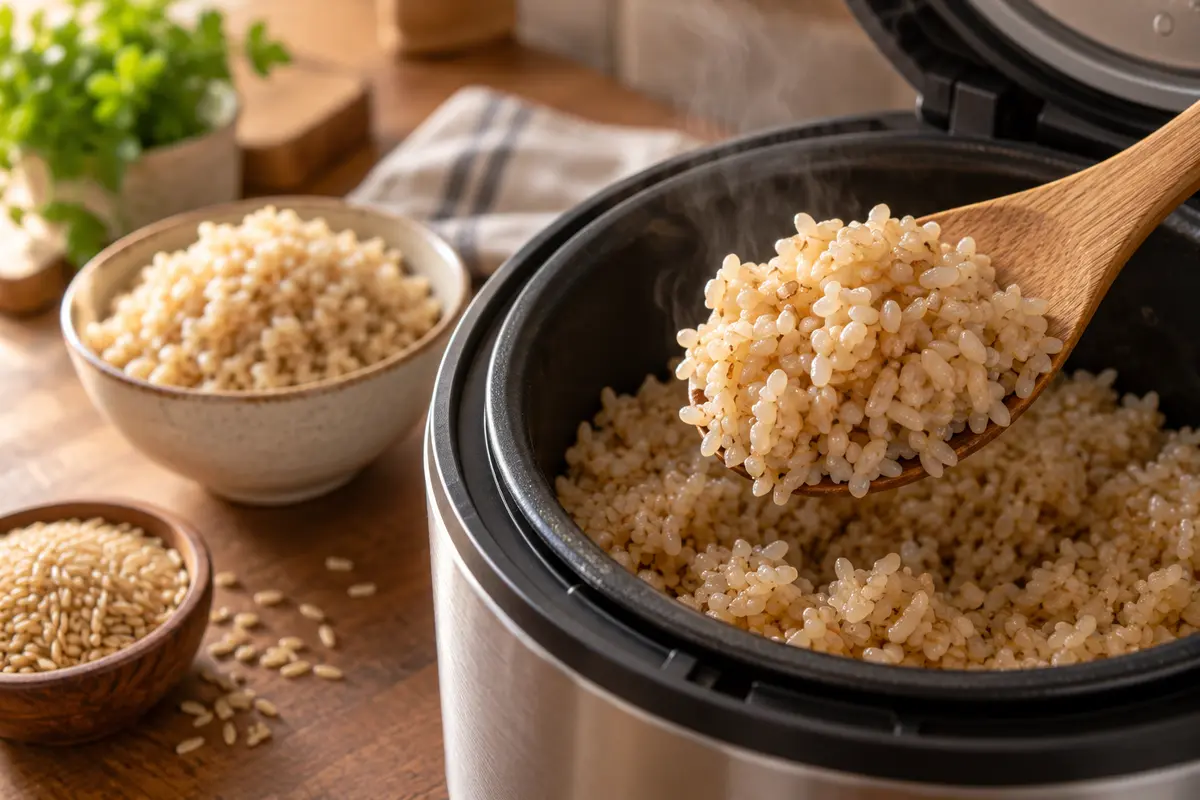
Cuckoo’s 6-cup Micom is the tinkerer’s choice. Its fuzzy-logic controller supports white rice, brown/GABA rice, multigrain, porridge, scorched rice, quick cooking and more. You can adjust soak time, heating and finished texture rather than accepting one factory profile.
That flexibility particularly benefits brown rice and mixed grains. The GABA mode uses an extended process intended for germinated brown rice, while the regular multigrain programs offer a more practical everyday option. Recent independent testing liked its pleasant, slightly sticky brown rice. Jasmine rice could turn clumpy on the default setting, however, which is exactly when the texture adjustments become useful.
A steam-based auto-clean program loosens residue, and the inner lid detaches for washing. The main pot is nonstick-coated, so avoid metal tools and abrasive scrubbers. This is a better fit for someone who will use the advanced controls than a buyer who simply wants one large Cook button.
- Why buy it: adjustable texture, GABA/multigrain modes, useful steam-clean cycle.
- Know before buying: defaults may need tuning for jasmine rice; coated pot.
- Official details: Cuckoo CR-0675F product page.
6. KitchenAid KGC3155BM — best premium hands-off cooker
Best for: beginners who want the machine to measure the water
Capacity: 8 cups cooked, per KitchenAid’s official definition
Typical price: about $260 on sale to $400 list
KitchenAid removes the most common source of rice-cooker errors: the water ratio. Its integrated scale senses the amount of grain in the ceramic nonstick pot, and a removable tank dispenses the calculated water. Choose one of 21 presets, load the ingredients and let the machine handle the measuring.
That system is genuinely useful for households that alternate between rice, quinoa, oats and other grains, especially when nobody wants to look up a new ratio. A touchscreen, steam basket, delayed cooking up to 24 hours and Keep Warm for up to six hours round out the package.
The convenience comes with two costs: money and depth. This is among the most expensive cookers in the guide and its body extends about 18 inches front to back, so measure beneath upper cabinets before ordering. The pot, water tank and steam components are removable, but there are more pieces to rinse than on a one-button machine. Also note that online capacity descriptions conflict; KitchenAid’s own page defines the eight-cup rating as cooked long-grain white rice, which is the figure we use here.
- Why buy it: automatic water dispensing, broad grain presets, very little measuring.
- Know before buying: premium price, deep footprint and only six hours of warming.
- Official details: KitchenAid Grain and Rice Cooker product page.
7. Aroma Select Stainless ARC-914SBDS — best uncoated pot
Best for: buyers who want to avoid an inner-pot coating
Capacity: 8 cups cooked
Typical price: about $50–70
Most rice cookers rely on a coated aluminum pot because rice releases easily from it. Aroma takes a different approach with an uncoated, food-grade 304 stainless-steel pot. That means there is no nonstick layer to scratch or eventually replace, and the pot tolerates more robust cleaning.
The cooker covers the essentials with White Rice, Brown Rice, Quinoa and Steam settings, a 15-hour delay timer and automatic Keep Warm. Its eight-cup cooked capacity and compact footprint suit couples and small families. At roughly four pounds, it is also easy to move into a cabinet between uses.
Stainless steel is not magically nonstick. Rice can form a film or browned layer, especially if the ratio is too dry or you lift the lid immediately. For easier release, let finished rice rest for about 10 minutes, fluff it gently and soak the pot before scrubbing. Choose this model for durable, coating-free construction—not because it outperforms the Hamilton Beach or Zojirushi on texture.
- Why buy it: uncoated 304 stainless pot, compact size and accessible price.
- Know before buying: rice can stick; simpler logic than premium fuzzy-logic models.
- Official details: Aroma ARC-914SBDS product page.
Best rice cooker by household and budget
Best for one person: Dash Mini
A solo diner usually needs only one uncooked rice cup—about 180 milliliters by the scoop supplied with most machines. The Dash Mini cooks that amount without spreading it too thinly across a family-size pot. It is inexpensive, easy to store and leaves at most one or two leftover portions. Choose a three-cup fuzzy-logic model instead only if you regularly cook multiple rice varieties and are willing to pay for finer control.
Best for families: Instant Pot 20-Cup
The Instant Pot’s 20-cup cooked capacity is appropriate for large households, weekly meal prep and dinners with guests. If your family normally eats four to six cups of cooked rice total, however, the Hamilton Beach or Cuckoo is a more space-efficient middle ground. Oversizing matters: a giant cooker is inconvenient to store and may not handle a very thin batch as evenly as a smaller pot.
Best budget option: Hamilton Beach 37548
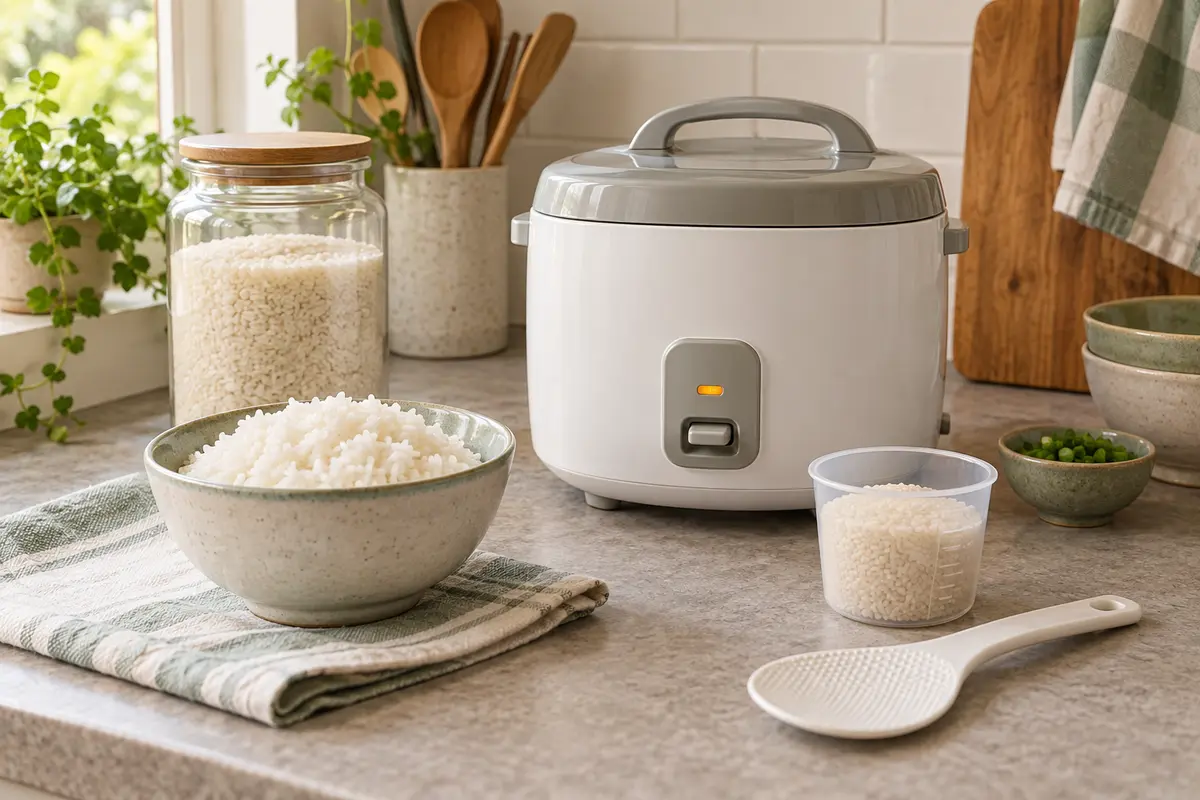
The $25 Dash is the least expensive pick, but Hamilton Beach is the better budget choice for a typical household because it has useful capacity, dedicated whole-grain controls and notably strong cooking results. Spending more mainly buys consistency across imperfect measurements, additional texture controls or automation—not necessarily better basic white rice.
Best for brown rice: Hamilton Beach 37548
For uncomplicated brown rice, the Hamilton Beach is our first choice: its Whole Grain program produced tender, well-defined results in recent testing without the premium price. Choose the Cuckoo instead if you specifically want GABA rice, adjustable soak time or frequent mixed-grain cooking. Whichever model you own, use its dedicated brown-rice line and cup because whole grains need more water and time than polished white rice.
Rice-cooker capacity: what “cups” really means
Capacity is the easiest specification to misread. Some brands advertise uncooked cups; others use cooked cups. One uncooked cup generally becomes about two cooked cups, although rice variety changes the yield. To make things more confusing, the supplied “rice cup” is usually 180 milliliters—smaller than a 240-milliliter U.S. measuring cup.
- One person: about 2–3 cooked cups.
- Two people: about 4–6 cooked cups.
- Family of four: about 8–12 cooked cups, depending on whether rice is a side or the meal base.
- Batch cooking or entertaining: 14–20 cooked cups.
Do not fill above the marked maximum line, especially with brown rice, porridge or mixed grains that foam. If counter space is limited, compare dimensions as carefully as capacity. Our guide to essential kitchen tools can also help you decide which appliances deserve permanent counter space.
Inner-pot materials: nonstick, ceramic or stainless?
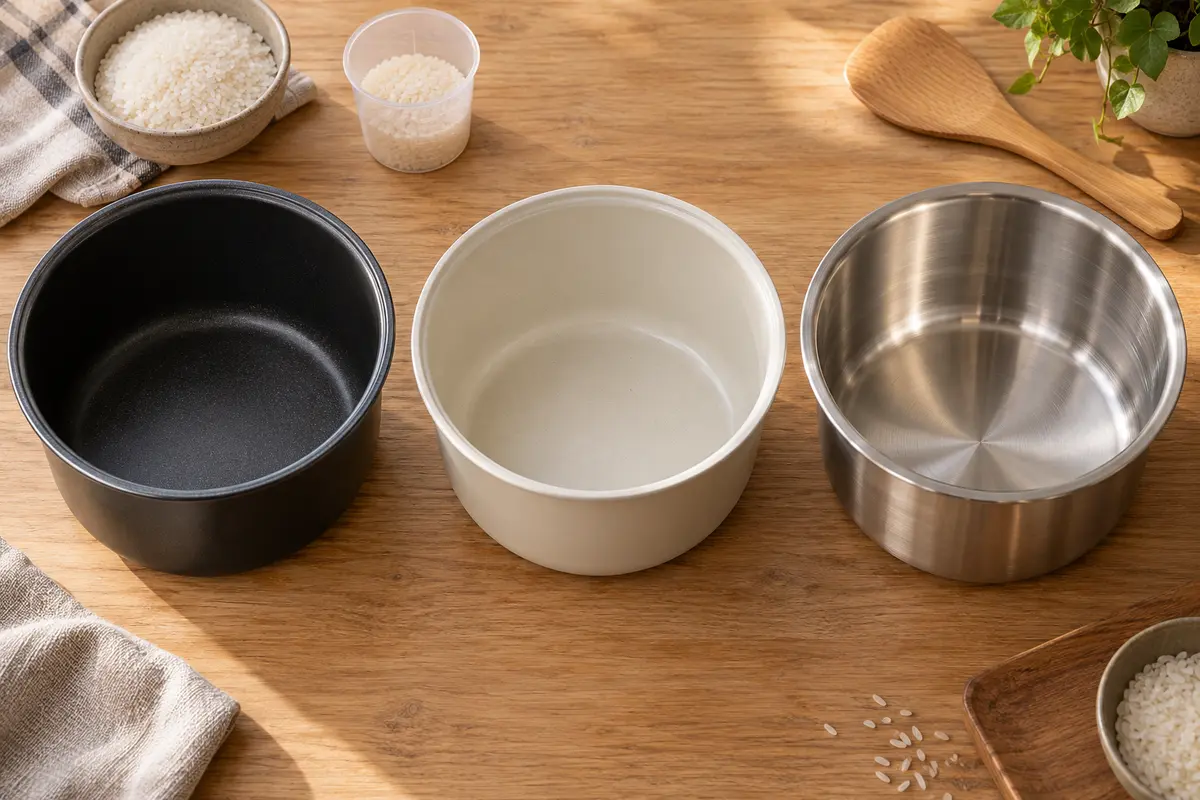
Traditional nonstick-coated metal
This is the most common construction because rice releases easily and the aluminum beneath conducts heat efficiently. Use the supplied plastic or silicone paddle, avoid abrasive cleaners and replace a pot whose coating is peeling or deeply damaged. “PFOA-free” does not automatically mean “PFAS-free,” so check the manufacturer’s exact current disclosure if that distinction guides your purchase.
Ceramic nonstick
Ceramic-coated pots are commonly marketed as PFAS-free and provide easy release when new. They can gradually lose slipperiness, particularly after dishwasher cycles or high heat, so hand washing is still the conservative choice. The KitchenAid in this guide uses a ceramic nonstick pot, while Hamilton Beach’s current 37548MN variant also advertises one.
Uncoated stainless steel
Stainless steel avoids a sacrificial coating and tolerates soaking and gentle scrubbing, but rice sticks more readily. A short rest after cooking, correct water ratio and prompt soaking make a large difference. The Aroma is the clear choice here if material simplicity outranks nonstick convenience. If safer-material research is a priority throughout your kitchen, our non-toxic air fryer guide uses the same careful distinction between coating claims and actual cooking surfaces.
Cleaning a rice cooker without damaging it
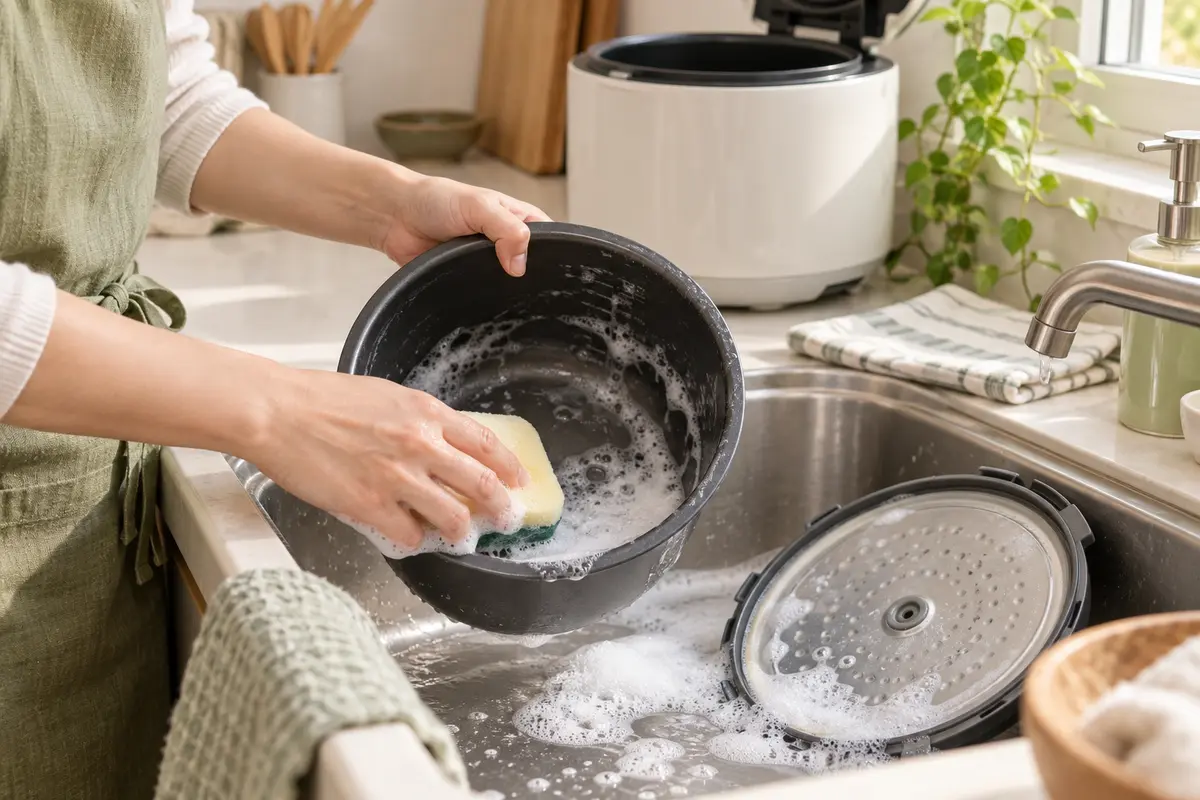
- Unplug and cool: never immerse the electrical body or clean a hot pot with cold water.
- Remove washable parts: take out the pot, inner lid, steam cap, condensation collector and accessories specified by the manual.
- Use a soft sponge: warm soapy water protects traditional and ceramic coatings. Even if parts are dishwasher-safe, hand washing is gentler.
- Clear the steam path: dried starch around the vent causes odors and messy boil-overs.
- Wipe the sensor and heating plate: a grain trapped beneath the pot can create hot spots. Use a barely damp cloth only after unplugging.
- Dry before reassembly: trapped moisture can smell stale and should never reach the electrical connector.
Do not cook directly in a pot with a lifting coating, and do not use a damaged cord or a cooker that repeatedly leaks into its base. For more routine appliance care, see our dishwasher-filter cleaning guide.
How long can rice stay on Keep Warm?
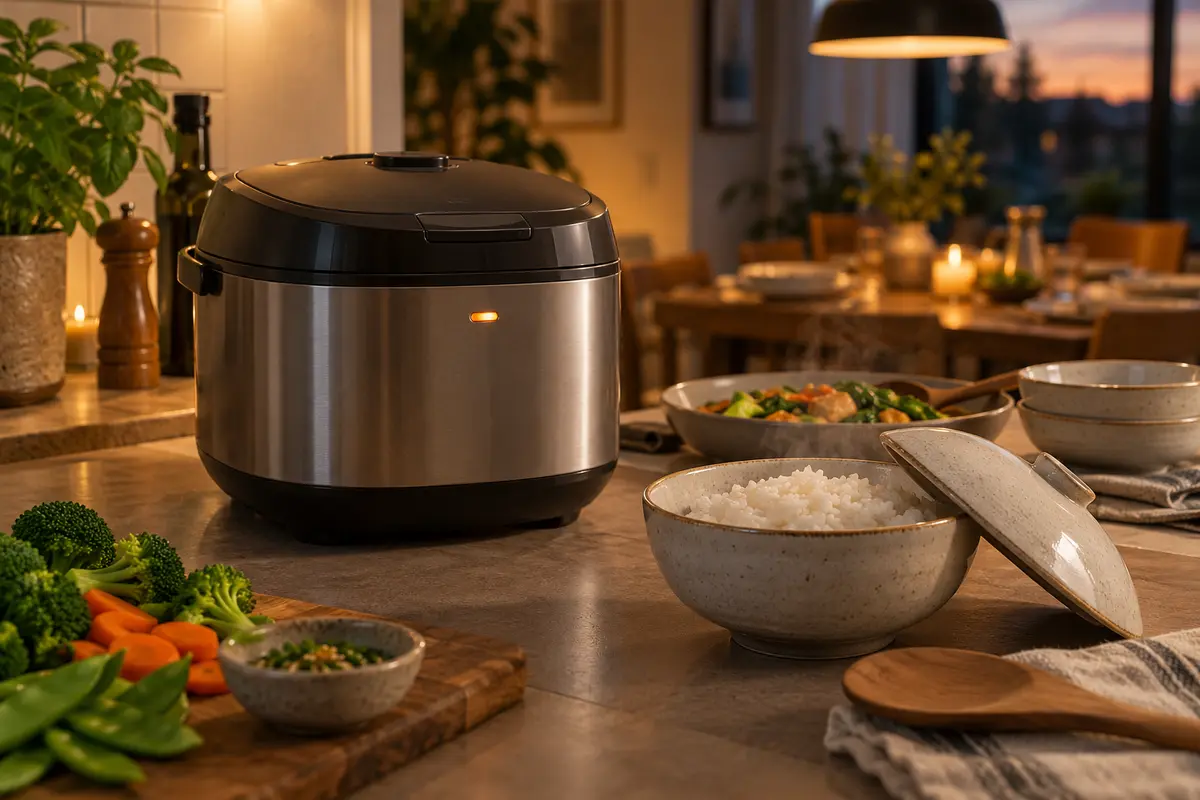
Follow the time limit in your cooker’s manual. Premium machines actively manage temperature and moisture, while simple cookers may gradually dry or brown the bottom. The Instant Pot specifies up to 10 hours and KitchenAid up to six; Zojirushi adds an extended-warm mode designed for longer holding.
Keep Warm is not the same as leaving cooked rice at room temperature. Rice can contain Bacillus cereus spores that survive cooking; the risk grows if cooked rice sits in the temperature danger zone. If you will not eat it soon, divide leftovers into shallow containers, cool them promptly and refrigerate. A warm mode that has switched off or cannot maintain safe heat should not be treated as storage.
Frequently asked questions
What size rice cooker is best for one person?
A two- to three-cup cooked capacity is enough for most solo cooks. The Dash Mini makes about two cooked cups. If you want leftovers or cook rice-based meals several times a week, a three-cup uncooked fuzzy-logic cooker offers more flexibility without becoming family-size.
Can every rice cooker make brown rice?
Most can, but a dedicated Brown Rice or Whole Grain program improves consistency because bran-covered grains need more water and time. The Hamilton Beach 37548 is our straightforward brown-rice pick; Cuckoo is better for cooks who want GABA and multigrain controls.
Is a stainless-steel rice-cooker pot better?
It is more durable and has no nonstick coating to wear, but rice sticks to it more easily. Stainless is “better” when coating-free construction is your priority; coated pots are more convenient for effortless release and fast cleanup.
Is fuzzy logic worth paying for?
Yes if you cook rice often, switch among grain types or occasionally mismeasure water. Fuzzy-logic models can adjust during the cycle and usually deliver more repeatable texture. For occasional white rice, a well-designed conventional cooker such as the Hamilton Beach offers better value.
Can I use a regular Instant Pot instead of a rice cooker?
A pressure multicooker can make good rice and saves space if you also pressure-cook. A dedicated rice cooker is easier for repeatable small batches, gentler texture control and automatic warming. The Instant Pot model in this guide is a dedicated 20-cup grain-and-rice cooker, not a pressure cooker.
How much should I spend on a rice cooker?
About $25 buys a useful solo cooker, $60–100 is the value sweet spot for most households, and $120–280 adds fuzzy logic, better warming or customization. Spend $300 or more only if a feature such as automated water dispensing solves a real problem in your routine.
The verdict
For most readers looking for the best rice cooker in 2026, the Hamilton Beach 37548 is the sensible first choice: it balances fluffy results, brown-rice performance, family-friendly capacity and price. The Zojirushi Neuro Fuzzy is worth the upgrade for frequent rice eaters who want the most consistent texture. The Dash Mini wins for one person, the 20-cup Instant Pot makes batch cooking easier, and the Aroma is the most straightforward route to an uncoated stainless pot.
Choose by the amount of rice you actually cook, not the biggest capacity or longest feature list. Then protect the inner pot, wash the steam parts and move leftovers safely. A modest cooker that fits your routine will be used far more often than a premium machine that monopolizes the counter.
Sources and specification checks
We checked current specifications against the official product pages linked in each review and used Serious Eats’ June 2026 rice-cooker testing as an independent performance reference. Capacity wording and included accessories can differ by region and retailer; the manufacturer page and manual for the exact model number should be your final reference.
Kitchen conditions and products vary. Follow manufacturer guidance and consult a qualified professional when safety or specialist work is involved.