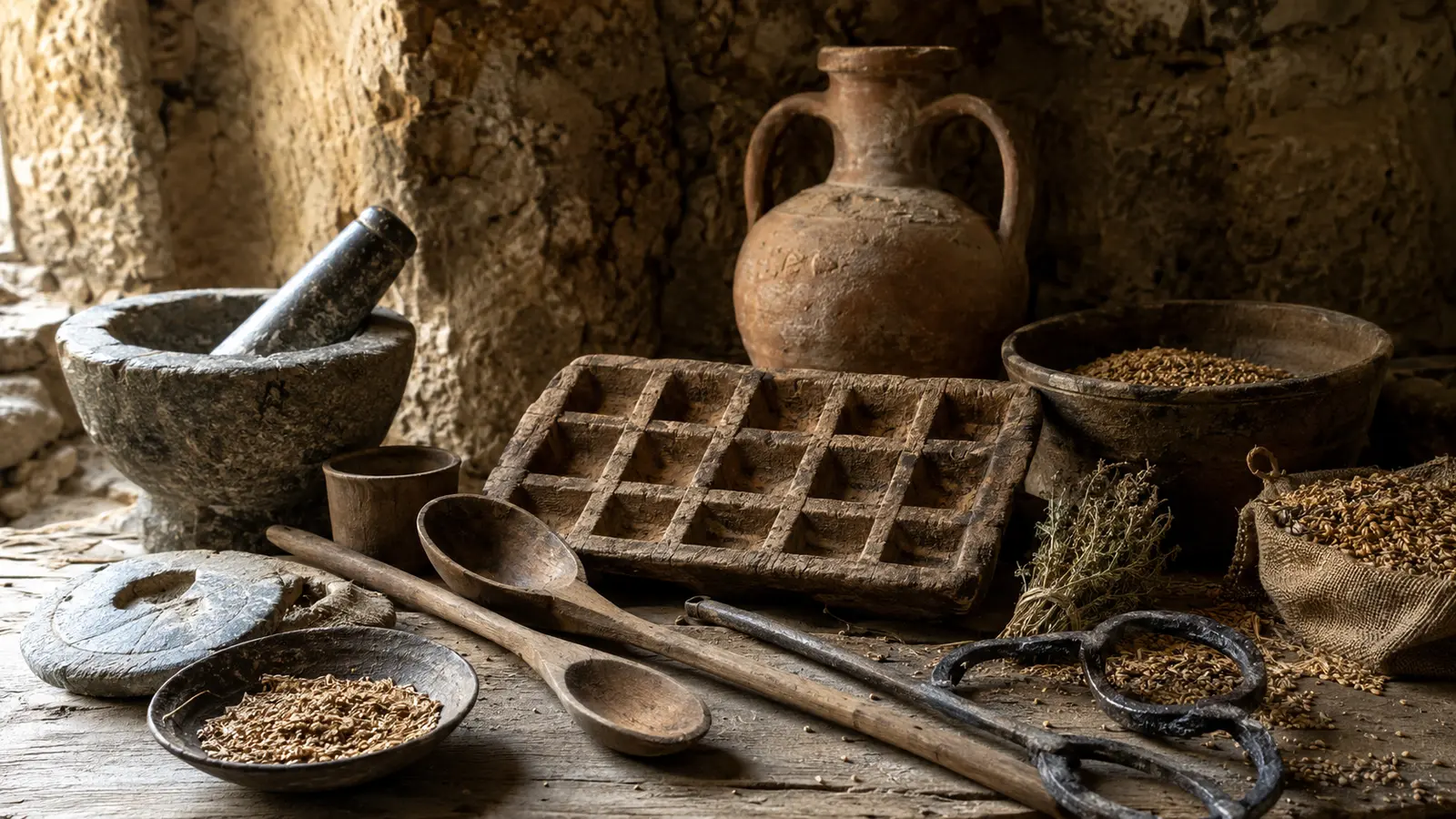
Ancient kitchen utensils reveal how people solved the same cooking problems we face today: how to grind grain, cut ingredients, control heat, preserve food, and serve a meal. The materials have changed and the tools have become more specialized, but a surprising number of modern kitchen essentials still follow designs developed thousands of years ago.
This visual guide traces 12 important ancient cooking tools from prehistory through the Renaissance. It explains what archaeologists and museum objects can tell us, where evidence is uncertain, and which familiar utensils are their closest modern descendants.
Ancient kitchen utensils at a glance
| Ancient tool | Main job | Common materials | Modern descendant |
|---|---|---|---|
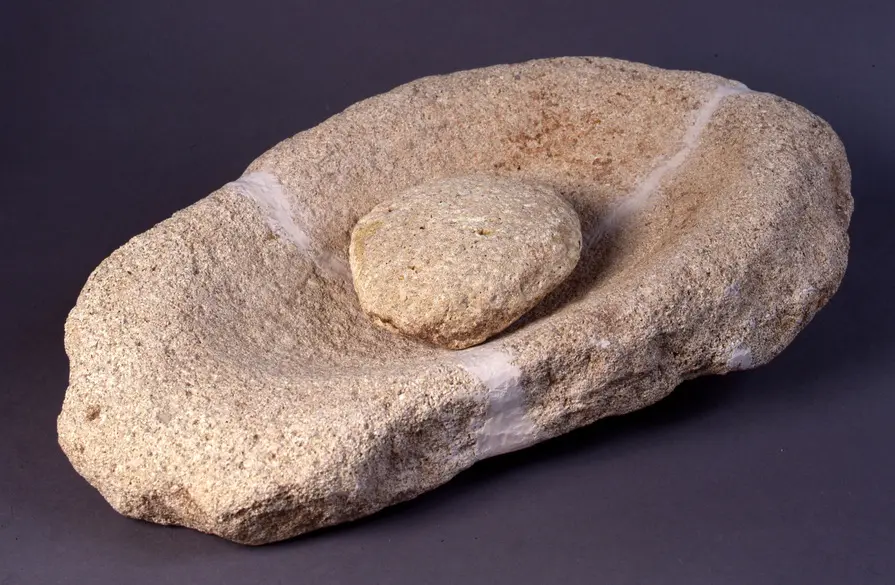
| 1. Quern and handstone | Grinding grain and seeds | Sandstone, basalt, limestone | Grain mill |
| 2. Mortar and pestle | Pounding herbs, spices, nuts, and grains | Stone, wood, ceramic | Mortar and pestle, food processor |
| 3. Grinding board | Crushing grain into meal or flour | Stone | Metate, millstone |
| 4. Bread mold | Shaping or baking dough | Clay | Loaf pan, baking mold |
| 5. Clay cooking pot | Boiling, stewing, and baking | Earthenware | Dutch oven, casserole |
| 6. Lopas pan | Frying or cooking fish and sauces | Terracotta | Skillet, sauté pan |
| 7. Roman mortarium | Mixing and grinding foods | Coarse ceramic | Mixing bowl, mortar |
| 8. Ladle and strainer | Serving liquids and separating solids | Bronze, iron, wood | Ladle, sieve, colander |
| 9. Storage jar or amphora | Storing and transporting food and drink | Clay | Pantry jar, bottle, fermentation crock |
| 10. Knife, spoon, and early fork | Preparing, serving, and eating food | Bone, wood, bronze, iron, silver | Modern cutlery |
| 11. Cauldron and pot hook | Cooking over an open hearth | Iron, bronze | Stockpot, height-adjustable grill |
| 12. Roasting spit | Turning food over a fire | Wood, iron | Rotisserie |
A note on evidence: wooden utensils and woven containers decay easily, so the archaeological record favors durable stone, pottery, and metal. Surviving objects show only part of what an ancient kitchen contained.
1. Querns and handstones: the original grain mills
Long before packaged flour, cooks ground grain by hand. A simple saddle quern used a smaller handstone against a larger, slightly hollowed stone. Repeated back-and-forth movement crushed wheat, barley, millet, and other seeds into coarse meal or flour.
Grinding was slow, repetitive work, but it made grains easier to cook and digest. Later rotary querns used two circular stones and a turning handle, improving both speed and consistency. The same basic goal now belongs to roller mills, grain grinders, and powerful blenders.
2. Mortars and pestles: ancient tools that never left
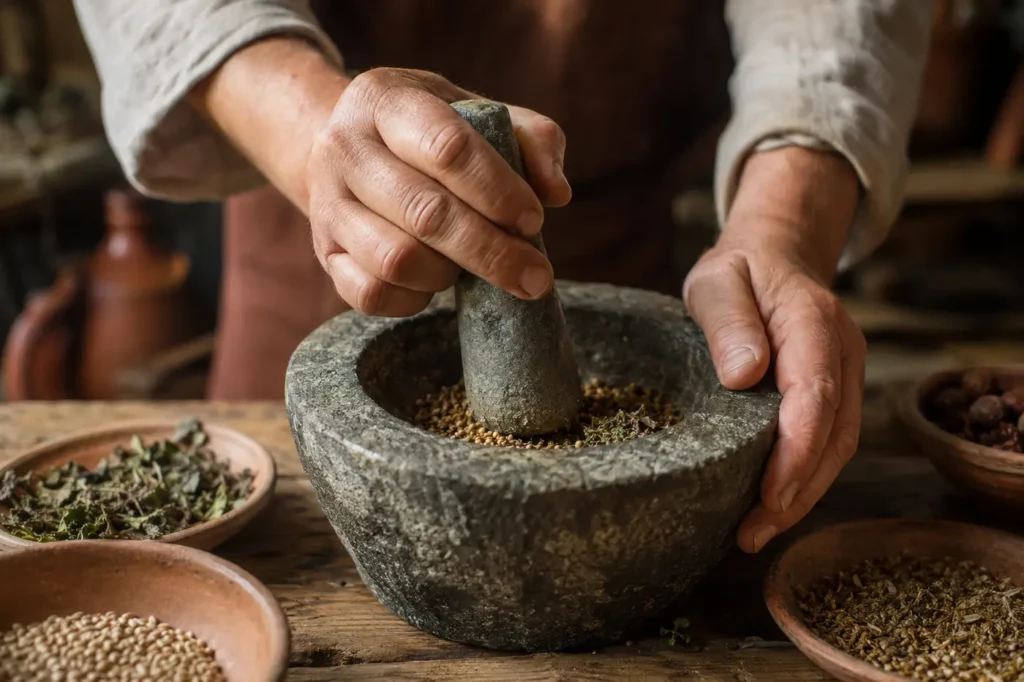
The mortar and pestle is one of history’s most durable kitchen designs. Instead of rubbing grain across a flat stone, a cook pounds or twists ingredients inside a bowl. That makes the tool useful for spices, herbs, nuts, garlic, medicinal plants, and small quantities of grain.
Stone gives weight and a rough grinding surface; wood is lighter and gentler; ceramic is useful for smaller, drier ingredients. Modern electric processors are faster, but a mortar still offers precise control over texture and releases aromatic oils without heating ingredients as aggressively.
3. Ancient Egyptian bread tools: grinding, kneading, molding, and baking
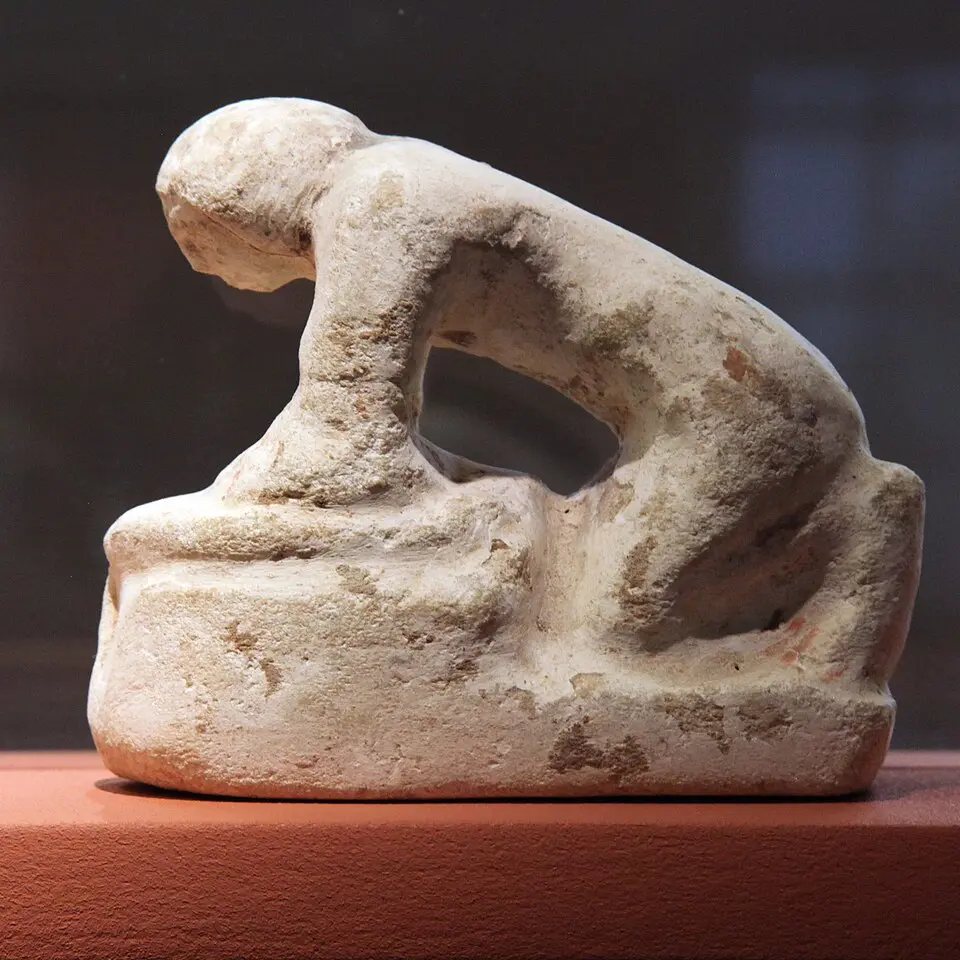
Bread and beer were staples in ancient Egypt, so grain preparation involved a complete set of tools. Surviving models and scenes show people pounding or grinding grain, kneading dough, working beside jars, and tending ovens. Clay molds and conical vessels are also associated with Egyptian bread production, although their exact use varied by period and context.
The important story is not a single decorative mold. It is a production system: grinding stones made flour, bowls held dough, hands or paddles mixed it, and clay ovens or heated vessels baked it. In some homes and workshops, brewing and breadmaking happened side by side because both began with processed grain.
4. Greek clay pots and pans: cookware designed around the hearth
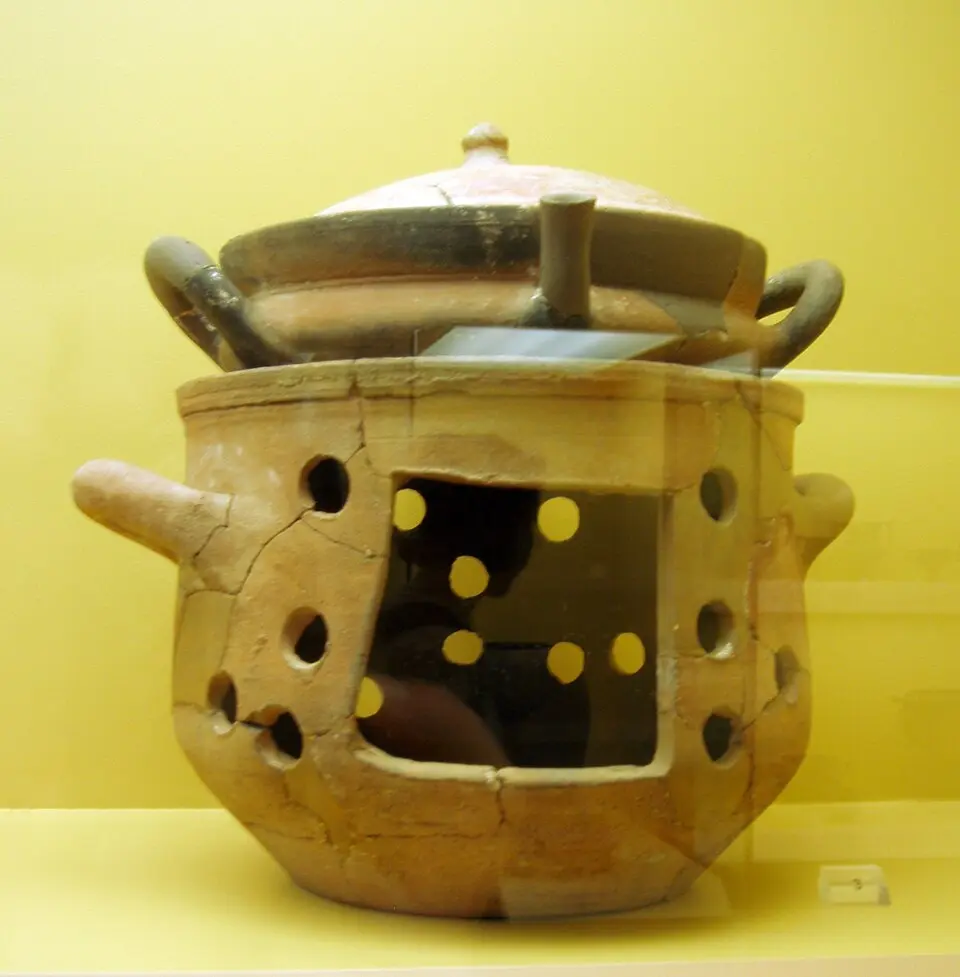
Ancient Greek cooks used specialized pottery as well as multipurpose vessels. The chytra was a cooking pot suited to boiling or stewing. The shallow lopas is often described as a pan for fish, sauces, or other foods that benefited from a broad cooking surface. Braziers supported vessels and held hot coals when a built-in hearth was unavailable.
Shape mattered as much as material. A rounded pot distributed heat differently from a shallow pan, while handles, lids, and feet helped cooks move or position vessels around a fire. The familiar difference between a stockpot and a skillet is therefore much older than the modern stove.
5. Roman kitchen utensils: mortaria, pans, ladles, and strainers
Roman kitchens combined pottery, stone, wood, bronze, and iron. A heavy ceramic mortarium had a gritty inner surface that helped crush and mix ingredients. Metal ladles, strainers, knives, and pans served more specialized jobs, especially in wealthy households and commercial food preparation.
Oil lamps belong in the picture because they illuminated workspaces, but they were not the Roman version of a slow cooker. Everyday cooking relied on hearths, braziers, ovens, and vessels placed over or near controlled heat. Roman culinary writing also shows that pounding, straining, mixing, and reducing sauces were important techniques.
6. Jars, amphorae, and fermentation vessels
Cooking did not end when a pot left the fire. Clay jars stored grain, oil, wine, sauces, and other ingredients; narrow-necked amphorae were especially useful for transport and controlled pouring. Coatings, stoppers, and vessel shape could help protect the contents, although no container made food automatically safe.
Fermentation also depended on vessels. Communities around the world used pottery, baskets, pits, wooden tubs, and other containers to transform or preserve ingredients. Modern crocks, pantry jars, wine vessels, and food-storage canisters continue that long relationship between container design and shelf life.
7. Ancient eating utensils: knives and spoons came before table forks
Knives are among humanity’s oldest multipurpose tools. They cut ingredients during preparation and could also be used at the meal. Spoons made from shell, bone, wood, ceramic, or metal were practical for broths, sauces, and soft foods.
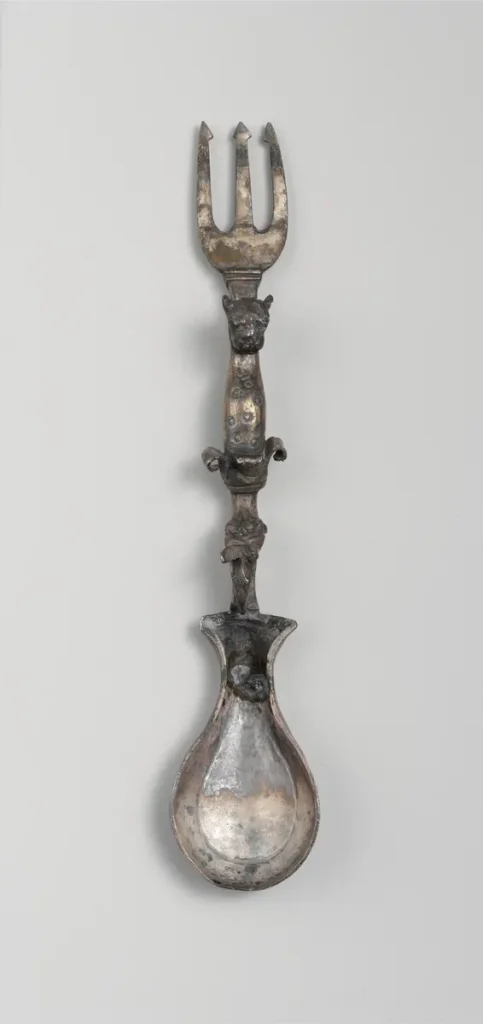
Fork-like tools existed in the ancient world, but they were not the universal personal table forks familiar today. Some were serving or cooking implements, and adoption as individual cutlery varied greatly by place and social class. Matching place settings became more common much later, as dining customs and metalworking changed.
8. Medieval cauldrons, pot hooks, and roasting spits
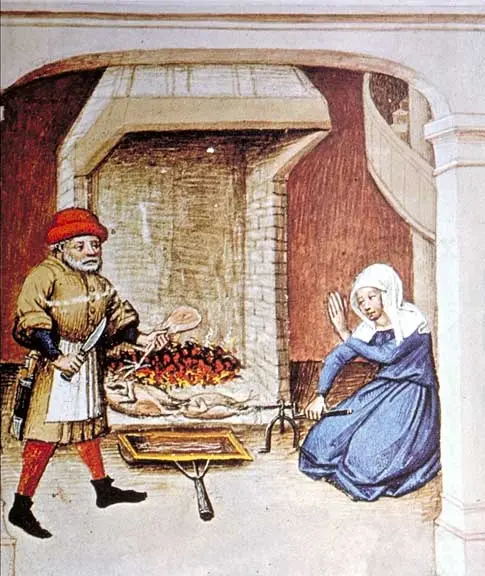
In a medieval hearth, cookware had to work with an open flame. A cauldron could hang from a chain or pot hook, letting the cook raise or lower it to adjust heat. Earthenware pots sat beside embers, while griddles and pans handled faster cooking.
Large households used roasting spits for meat and birds. Turning the spit promoted more even cooking, while a pan below could catch valuable fat and juices. The technique survives in rotisserie ovens, barbecue spits, and vertical roasting systems.
9. The Renaissance kitchen: more specialized tools and tableware
Renaissance kitchens did not abandon older equipment; they added specialization. Wealthier households could own decorated molds, pastry tools, elaborate serving vessels, and more varied cutlery. Printed cookbooks helped techniques travel, while trade supplied new ingredients that demanded different methods of grinding, straining, preserving, and serving.
Table forks spread gradually rather than appearing everywhere at once. Their use reflected local customs, status, and the food being served. For most people, sturdy pots, knives, spoons, wooden paddles, and hearth tools remained more important than ornate place settings.
What ancient cooking tools tell us about daily life
- Food required labor. Grinding grain, hauling fuel, drawing water, and maintaining a fire could take longer than the final cooking.
- Tools reflected local resources. Communities worked with the stone, clay, wood, shell, bone, and metals available to them.
- Kitchens were social spaces. Grain processing, brewing, baking, and feast preparation often involved several people.
- Durability mattered. A well-made vessel or grinding stone could remain useful for years and sometimes pass between generations.
- There was no single “ancient kitchen.” Equipment varied across time, geography, wealth, fuel supply, and food traditions.
Ancient designs still in the modern kitchen
The clearest legacy is continuity of shape and purpose. A mortar still crushes spices. A Dutch oven performs the slow, moist cooking once handled by heavy clay or metal pots. A rotisserie turns food like a roasting spit. A loaf pan shapes dough like an older mold. Even the difference between a deep pot and a shallow pan reflects heat-management choices understood by ancient cooks.
If you are building a practical modern toolkit, compare these long-lived designs with our guide to essential kitchen tools. Two other descendants of early technology deserve special care: learn how to sharpen a kitchen knife safely and how to season cast iron.
How to read museum displays of ancient utensils
Look beyond an object’s label and ask four questions: What material is it made from? What wear marks appear on it? Was it found in a home, workshop, tomb, shipwreck, or rubbish deposit? Is its proposed use certain, or is it one interpretation? Context often tells archaeologists more than the tool alone.
Useful starting points include the British Museum’s culinary-equipment collection category, The Met’s discussion of food preparation and breadmaking at Amarna, and the Getty’s Roman meal-preparation fresco.
Why these old tools still matter
Ancient kitchen utensils are not merely curiosities. They record repeated experiments in leverage, friction, heat control, storage, and human comfort. A good tool reduced effort, made ingredients edible, preserved scarce food, or helped a group share a meal.
The next time you grind pepper, stir a stew, lift a ladle, or roast food on a turning spit, you are using the latest version of a much older idea. Technology changes quickly; successful kitchen design often changes very slowly.
Frequently asked questions
What were the earliest kitchen utensils made from?
Early cooking tools were made from locally available stone, wood, bone, shell, fiber, and clay. Copper, bronze, and iron utensils appeared later, but organic materials survive less often in archaeological sites.
What are examples of ancient cooking utensils?
Examples include querns, handstones, mortars and pestles, grinding boards, bread molds, clay pots, braziers, mortaria, knives, ladles, strainers, cauldrons, pot hooks, and roasting spits.
What ancient eating utensils did people use?
Knives and spoons were common in many cultures, made from materials such as wood, bone, shell, bronze, iron, or silver. Fork-like implements existed, but personal table forks became widespread much later and at different rates across regions.
How old are mortars and pestles?
Pounding and grinding tools predate written history. Archaeological finds show that early communities used stone implements to process wild plants and, later, cultivated grains.
Which ancient kitchen tools are still used today?
Mortars and pestles, knives, spoons, clay cooking pots, grinding stones, skewers, roasting spits, baking molds, strainers, and fermentation jars all have recognizable modern versions.
Kitchen conditions and products vary. Follow manufacturer guidance and consult a qualified professional when safety or specialist work is involved.